
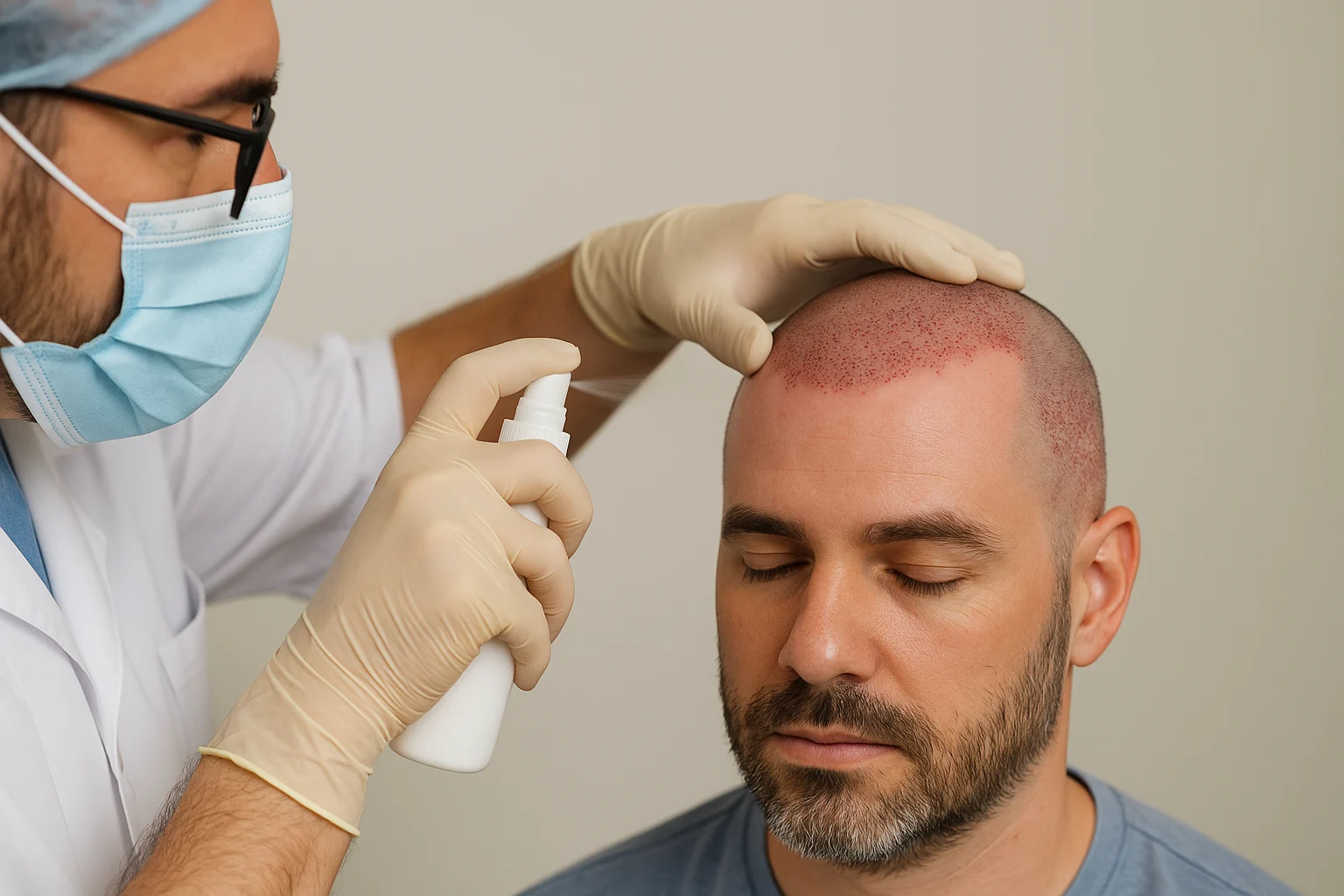
Introduction: If you have just undergone a hair transplant, you might be wondering why your surgeon handed you a bottle of saline spray. Using a saline spray after hair transplant surgery is a common aftercare step that helps your new grafts heal and thrive. In this friendly guide, we’ll explain why saline solution is used, how often and how long to use it, and some safety tips to ensure the best results. No complicated jargon here – just simple advice to help you take care of your newly transplanted hair.
Why Use Saline Spray After a Hair Transplant?
A hair transplant involves moving hundreds or thousands of tiny grafts into your scalp, leaving small incisions that need gentle care. Saline spray (a sterile saltwater solution) is recommended by many hair transplant clinics because it offers several benefits for your healing scalp:
- Keeps the scalp hydrated: The transplanted area can become dry after surgery. A light mist of saline keeps the grafts and surrounding skin moist, preventing dryness and itchiness. This hydration also stops hard crusts from forming too quickly.
- Prevents scabs and crusting: By keeping the area moist, saline spray helps avoid thick scabs that could hinder new hair growth or even dislodge grafts. In fact, spraying from a slight distance without touching the scalp can prevent scab formation that might block hair. Soft scabs will form, but they stay pliable and fall off more easily when the area is kept damp
- Protects against infection: Saline is a natural cleanser. Gently spraying the recipient area helps rinse away blood and bacteria without harsh chemicals, keeping the area clean and reducing infection risk. Saltwater is inhospitable to many germs, so regular spraying creates a cleaner healing environment.
- Promotes healing of grafts: Doctors often say that the more you keep the grafts moist (within reason), the faster they tend to heal. Saline spray acts as a bridge between your blood, scalp skin, and grafted hairs, maintaining an ideal environment for follicles to recover. Well-hydrated grafts are happy grafts – they are less likely to dry out or get damaged, which can improve their survival.
- Soothes irritation: Saline solution has the same salt concentration as our blood and tears (about 0.9% salt), so it’s very gentle on tissues. It doesn’t sting. Spraying saline can calm that tight, irritated feeling on your scalp after surgery and decrease itching or irritation. Some patients even use a cool saline mist to relieve itchiness as scabs form.
In short, saline spray is your transplanted hair’s best friend in the first few days: it keeps the area clean, moist, and protected. This simple saltwater mist can speed up follicle recovery, prevent complications, and keep you more comfortable
How Often and How Long Should You Use Saline Spray?
Frequency in the first days: Your clinic will give you specific instructions, but typically you will start using the saline spray within hours of your surgery or by the next day. In the immediate post-op period, frequency is key. Many surgeons recommend spraying the recipient (transplanted) area very often on Day 0-1 – usually every 30 minutes to hourly while you’re awake. It might sound like a lot, but frequent light sprays keep the grafts from drying out during those crucial first 12-24 hours. Don’t worry, you won’t have to keep up that pace forever!
After the first day: Once you get past the first day or so, you can usually taper down the frequency a bit. For the next several days, a common routine is to spray every 2-3 hours during the day. Essentially, whenever you remember (or whenever the area starts feeling a little tight or itchy), give it a light mist. Some clinics advise at least 3 times a day as a minimum, while others say “the more, the better” within reason. The idea is to consistently keep the area slightly moist, not drenched. A gentle mist every few hours prevents the scalp from drying out.
At night: You can rest easy – literally. You do not need to wake up every hour overnight to spray. Most doctors say it’s fine to spray the saline right before you go to bed, and then again when you wake in the morning. The grafts will be okay during the night without spraying. Just be sure to sleep with your head slightly elevated (as you likely were instructed) to reduce swelling, and perhaps lay a towel on your pillow to catch any drips. If you happen to wake up naturally in the night, you could do an extra spray, but it’s not mandatory. Getting good sleep is important for healing too!
Duration – how many days: This varies a bit by clinic and individual, but generally you will use the saline spray regularly for the first 4 to 7 days after your hair transplant. Many hair transplant centers recommend continuing until about day 5 or day 7. By around a week post-op, you usually can start washing your hair very gently, and at that point constant spraying may not be needed. For example, some surgeons have patients stop saline after day 4 once they begin gentle washing, whereas others advise continuing daily sprays for the full first week.
Listen to your surgeon: Always follow the specific timeline your doctor gave you, since techniques can differ. Some patients with very sensitive skin or those in dry climates might be told to spray a bit longer. A few surgeons even suggest using saline for up to 10-14 days (about two weeks) until all scabs have shed. Generally, one week of saline spray is typical before you switch to just normal washing and care. If in doubt, check with your clinic on when it’s okay to stop.
Tips for Using Saline Spray Properly
Using the spray is simple, but these tips will ensure you get the most benefit and avoid harming those delicate grafts:
Use a light mist from a distance: Hold the spray bottle a few inches away (about 4-6 inches is good) and mist the transplanted area lightly. You’re not trying to power-wash your scalp – do not soak the grafts until they drip. A gentle, even spritz is enough to cover the area. If saline solution starts running down your face, you’re probably spraying too much or too close.
- Avoid direct contact with the scalp: Never press the nozzle against your scalp or scrub the area. The force can disturb grafts. Spritz above the area and let the saline fall like a soft rain. Also, do not rub or pat the grafts directly. If excess saline is dripping, you can gently dab around the area with clean gauze after a few minutes, but don’t wipe the grafts. They need to stay put!
- Keep it clean: Only use sterile saline solution as instructed. Typically, your clinic provides a spray bottle filled with medical saline. If you run out, you can buy a sterile saline wound wash or contact lens saline from a pharmacy – just ensure it’s normal 0.9% saline with no additives. (Avoid homemade saltwater unless directed by your doctor, since tap water can harbor bacteria.) Always wash your hands before handling the spray bottle or touching near the transplant area to keep things hygienic.
- Follow your surgeon’s product advice: Use the saline (and any special shampoo or moisturizer) that your surgeon provided or approved, and avoid unapproved products in the first days. This means no random over-the-counter wound sprays or fancy healing tonics unless your doctor says it’s okay. The transplanted area is very sensitive, so stick with the basics your medical team gave you.
- Get help if needed: If you find it awkward to reach certain spots, don’t hesitate to ask a partner or friend to help spray your scalp for the first day or two. It is important that every part of the recipient area gets moisture. Having someone gently spray for you can also help you avoid accidentally knocking the bottle against your head. Just make sure they have clean hands and know to be gentle.
- Combine with other aftercare steps: Saline spray is just one part of post-hair-transplant care. Remember to also follow any other instructions like sleeping propped up, taking prescribed antibiotics or anti-inflammatories, and avoiding smoking or strenuous activity for a bit. All these steps together give your new hair the best start. For instance, spraying saline about 10-15 minutes before your first gentle hair wash (as instructed by your clinic) can soften any scabs and make washing easier and safer. Timing your spray before washing or before applying any medicated foam (if prescribed) can improve their effectiveness.
Safety and Hygiene Considerations
- Use sterile, sealed saline: Ideally, use the prepared spray given by your clinic. If you need more, get sterile saline (look for “0.9% sodium chloride solution”) from a pharmacy. Ensure the bottle or packets are sealed – you don’t want to introduce germs by using a contaminated solution. Never reuse an old saline bottle that’s been sitting around; get a fresh one if needed to avoid any bacteria.
- Don’t contaminate the spray nozzle: Be careful not to touch the spray tip with your fingers or let it touch any unclean surface. If it contacts your scalp or hair by accident, wipe it with an alcohol swab. This prevents bacteria from getting into the bottle. Also, store the bottle with its cap on when not in use. Keeping the spray tip clean is important since you’re using it on a surgical area.
- Watch for any irritation or allergy: It is rare, but if you notice any unusual stinging, redness, or rash after using the saline spray (and it’s not just normal post-surgery redness), mention it to your doctor. Plain saline doesn’t typically cause reactions because it’s so simple, but your scalp is extra sensitive now. Most likely, saline will feel good and soothing – it should not burn. If something doesn’t feel right, get medical advice.
- Do not substitute with other sprays: Stick to saline. Do not use antiseptic sprays, alcohol, peroxide, or anything not approved on your grafts – these can damage the fragile hair grafts and skin. Saline is gentle and won’t interfere with healing. Unless your surgeon gives a special medicated spray, no other sprays or liquids should be applied on the recipient area in the first days except saline. (Medicated ointments are usually for the donor area stitches, not the graft sites.)
- Continue general scalp hygiene: Even with frequent saline spraying, you should still avoid any actual shampoo or shower on the transplant area for the first few days unless instructed otherwise. Saline doesn’t replace washing long-term; it’s just a bridge until you can safely shampoo. Once your doctor clears you to wash your hair (usually around day 4-7), you might not need saline as much. But you may still use it occasionally to keep remaining scabs soft or to relieve itching. Just maintain overall cleanliness by following the washing guidelines given (usually gentle rinsing with a cup, baby shampoo, etc., in the first week).
Conclusion
Caring for your new hair grafts might seem daunting at first, but a little saline spray goes a long way in making the process smooth and successful. Saline spray after a hair transplant is used to keep your scalp clean, hydrated, and free of crusts, which in turn helps your new hairs settle in and heal faster. Use it often in the first week as directed by your doctor – typically every couple of hours at first – and remember not to touch or rub the grafts. This simple step will help protect your investment in your new hair by preventing infection and promoting healthy growth.
In the weeks to come, your scalp will heal, the tiny scabs will shed naturally (don’t pick them!), and you will gradually return to your normal hair routine. By diligently using the saline spray and following your post-op instructions, you’re setting the stage for optimal results. Soon enough, those transplanted follicles will be on their way to growing strong, healthy hair. If you have any doubts along the way, never hesitate to reach out to your hair transplant clinic – they are there to help. Happy healing, and here’s to your new hair!
Leave a reply