
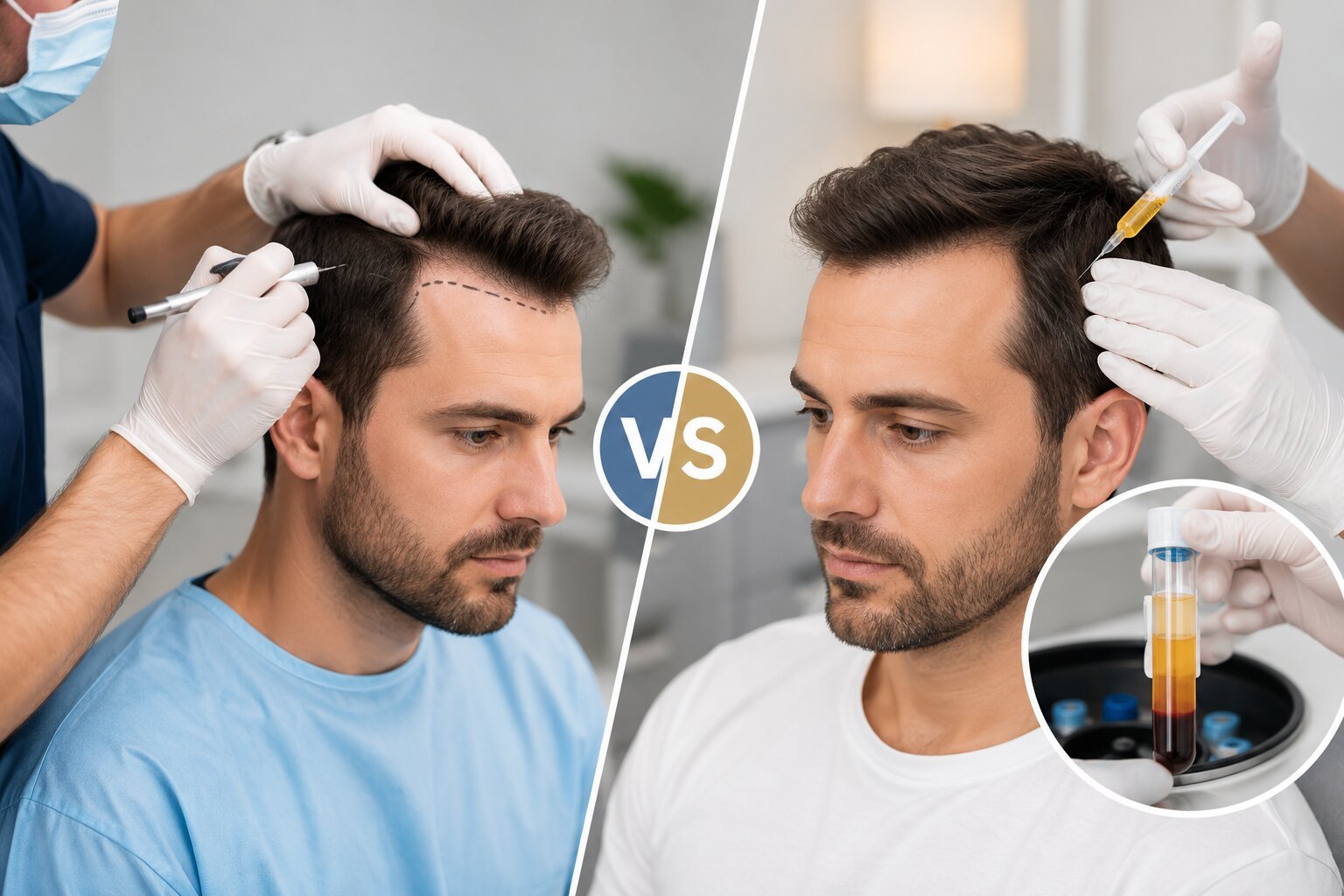
Hair loss is one of the most common concerns affecting both men and women today. Whether it’s caused by genetics, stress, hormonal changes, or lifestyle factors, losing hair can impact confidence and self-esteem. Fortunately, modern hair restoration treatments offer effective solutions. Two of the most popular options are Hair Transplant and PRP (Platelet-Rich Plasma) Therapy.
But which treatment is right for you?
In this guide, we’ll compare Hair Transplant vs PRP, explain how each treatment works, and help you understand which option may suit your hair loss condition best.
Understanding Hair Loss
Before choosing a treatment, it’s important to understand the cause and stage of your hair loss. Some people experience mild hair thinning, while others suffer from significant bald patches or receding hairlines.
Common causes of hair loss include:
- Genetic baldness (Androgenetic Alopecia)
- Stress and lifestyle changes
- Hormonal imbalance
- Nutritional deficiencies
- Medical conditions
- Aging
A proper diagnosis from a qualified hair restoration specialist is essential for selecting the right treatment.
What Is PRP Therapy?
PRP (Platelet-Rich Plasma) Therapy is a non-surgical hair restoration treatment that uses the healing properties of your own blood to stimulate hair growth.
How PRP Works
The procedure involves:
- Drawing a small amount of blood
- Processing it in a centrifuge to separate platelet-rich plasma
- Injecting the PRP into the scalp
Platelets contain growth factors that help improve blood supply to hair follicles and encourage natural hair growth.
Benefits of PRP for Hair Loss
1. Non-Surgical Procedure
PRP is minimally invasive and does not require cuts or stitches.
2. Natural Treatment
Since your own blood is used, the risk of allergic reactions is minimal.
3. Quick Recovery
Most patients return to normal activities the same day.
4. Improves Hair Thickness
PRP can strengthen weak hair follicles and improve hair density.
5. Suitable for Early Hair Loss
It works best for individuals experiencing mild to moderate thinning.
Limitations of PRP
While PRP offers several benefits, it may not be ideal for advanced baldness. PRP cannot create new hair follicles in completely bald areas. Multiple sessions and maintenance treatments are usually required for long-term results.
What Is a Hair Transplant?
A Hair Transplant is a surgical procedure that moves healthy hair follicles from one part of the scalp (donor area) to areas with thinning or no hair.
The two most common techniques include:
- FUE (Follicular Unit Extraction)
- FUT (Follicular Unit Transplantation)
Among these, FUE is more popular because it is minimally invasive and leaves minimal scarring.
How Hair Transplant Works
Healthy hair follicles are extracted from the back or sides of the scalp and implanted into bald or thinning areas. These transplanted follicles continue to grow naturally over time.
Benefits of Hair Transplant
1. Permanent Results
Transplanted hair follicles are typically resistant to hair loss.
2. Natural Appearance
Modern techniques provide natural-looking hairlines and density.
3. Effective for Advanced Hair Loss
Hair transplants can restore hair even in completely bald areas.
4. Long-Term Solution
Unlike temporary treatments, hair transplants offer lasting results.
5. Improved Confidence
Many patients experience significant improvement in appearance and self-esteem.
Limitations of Hair Transplant
- It is a surgical procedure
- Recovery time is longer compared to PRP
- Results take several months to become visible
- It may involve a higher initial cost
Hair Transplant vs PRP: Key Differences
| Feature | PRP Therapy | Hair Transplant |
| Procedure Type | Non-surgical | Surgical |
| Best For | Early hair thinning | Moderate to severe hair loss |
| Recovery Time | Minimal | Few days to weeks |
| Results | Temporary improvement | Long-lasting results |
| Downtime | Almost none | Mild downtime |
| Cost | Lower initially | Higher upfront cost |
| Maintenance | Multiple sessions required | Usually one major procedure |
| Hair Growth | Stimulates existing follicles | Restores lost hair |
Which Treatment Is Right for You?
The right treatment depends on your stage of hair loss, goals, age, and scalp condition.
PRP May Be Right for You If:
- You have early-stage hair thinning
- You want a non-surgical solution
- You still have active hair follicles
- You are looking to improve hair quality and density
- You want minimal downtime
Hair Transplant May Be Right for You If:
- You have noticeable bald patches
- Your hairline has significantly receded
- You want permanent hair restoration
- You have sufficient donor hair
- PRP alone is no longer effective
Can PRP and Hair Transplant Be Combined?
Yes. In fact, many hair restoration specialists recommend combining both treatments for enhanced results.
PRP can be used:
- Before a hair transplant to improve scalp health
- After a transplant to support healing and graft survival
- To strengthen existing hair around transplanted areas
The combination approach often leads to better hair density and overall results.
What Results Can You Expect?
PRP Results
- Initial improvement may appear within 3-6 months
- Hair may become thicker and healthier
- Maintenance sessions are often needed
Hair Transplant Results
- Hair shedding may occur initially (normal process)
- New growth typically starts after 3-4 months
- Full results usually appear within 9-12 months
Expert Advice Matters
Choosing between PRP and Hair Transplant should never be based only on online information. Every individual’s hair loss pattern is different.
An experienced hair restoration specialist will evaluate:
- Hair density
- Scalp condition
- Donor area strength
- Medical history
- Hair loss stage
This professional assessment helps create a personalized treatment plan.
FAQs
Is PRP better than a hair transplant?
PRP and hair transplant treatments serve different purposes. PRP helps strengthen existing hair, while a hair transplant restores lost hair in bald areas.
Is PRP painful?
PRP involves mild discomfort, but most patients tolerate the procedure well.
How long does a hair transplant last?
Hair transplants are generally considered permanent because the transplanted follicles are resistant to hair loss.
Can PRP regrow hair on a bald scalp?
PRP is less effective on completely bald areas because it cannot create new follicles.
Which is more affordable: PRP or Hair Transplant?
PRP has a lower initial cost, but multiple sessions may be required. Hair transplant costs more upfront but provides long-term results.
Final Thoughts
Both PRP and Hair Transplant treatments can effectively address hair loss, but they serve different purposes.
- PRP is ideal for early hair thinning and improving existing hair quality.
- Hair Transplant is the better option for restoring hair in bald areas and achieving permanent results.
In many cases, combining both treatments provides the best outcome.
If you are experiencing hair loss, consult a qualified hair restoration expert to determine the most suitable treatment for your condition. Early intervention often leads to better and more natural-looking results.
Disclaimer: Tricho Talk works like a casting platform to help suggest the most suitable doctor for individuals seeking a hair transplant. The information shared in this blog is for educational purposes only and should not be considered medical advice, diagnosis, or treatment. Always consult a qualified hair restoration specialist for a personalized evaluation and treatment plan.
Leave a reply