
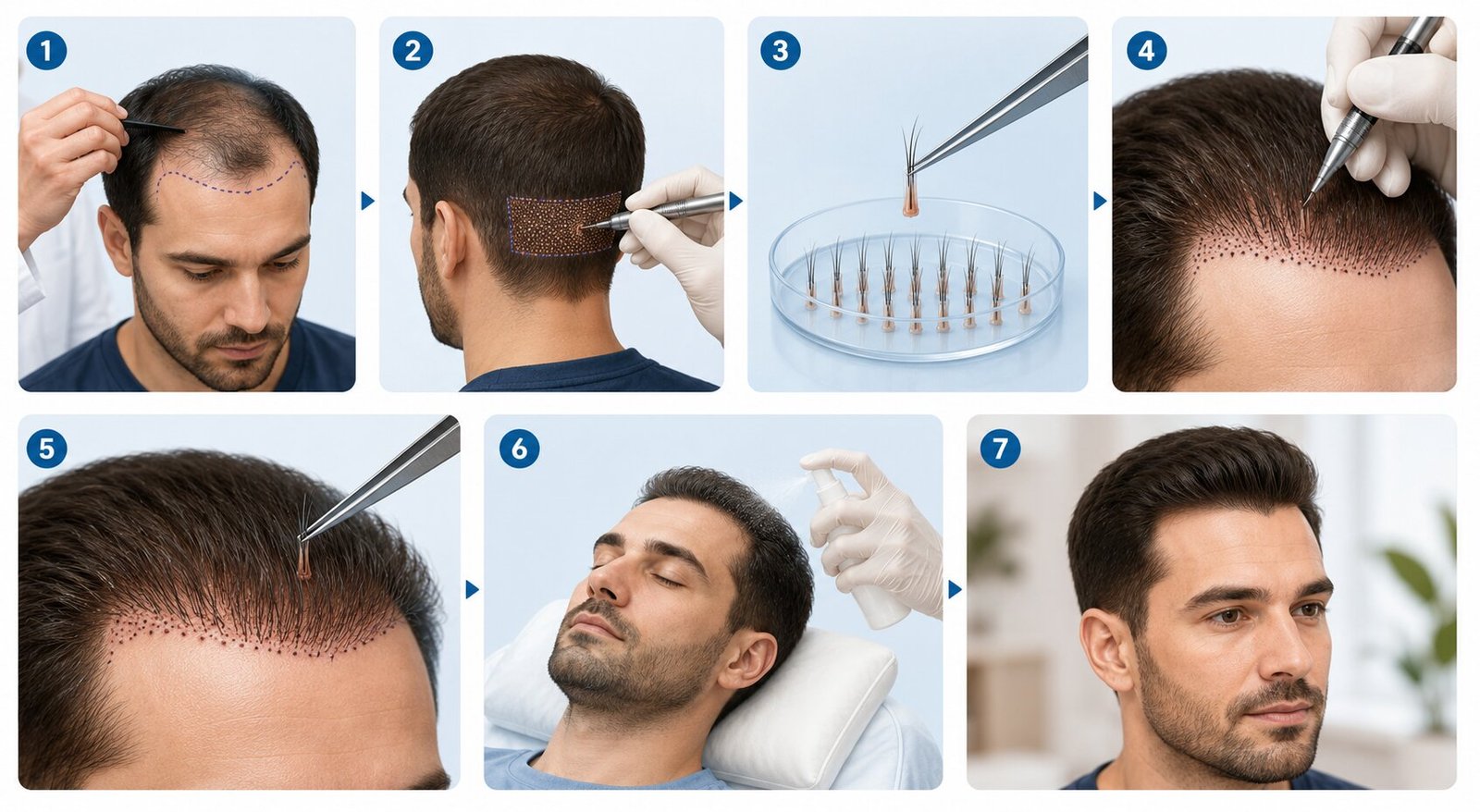
Hair loss can affect confidence, appearance, and overall self-esteem. Fortunately, advancements in hair restoration techniques have made a Hair Transplant one of the most effective and permanent solutions for hair loss. In 2026, modern procedures are safer, more precise, and deliver natural-looking results when performed by experienced specialists.
If you’re considering a Hair Transplant in Delhi or anywhere else, understanding the process can help you make informed decisions. This guide explains the seven essential steps involved in a modern hair transplant procedure.
What Is a Hair Transplant?
A hair transplant is a minimally invasive surgical procedure that moves healthy hair follicles from a donor area-typically the back or sides of the scalp-to areas affected by thinning or baldness. Since the transplanted follicles are resistant to hair loss, they continue to grow naturally in their new location.
Modern techniques such as Follicular Unit Extraction (FUE) and Direct Hair Implantation (DHI) have significantly improved the accuracy and success rates of hair restoration procedures.
Step 1: Comprehensive Consultation and Hair Analysis
Every successful Hair Transplant begins with a detailed consultation.
During this stage, the doctor evaluates:
- Hair loss pattern
- Donor hair density
- Scalp condition
- Medical history
- Future hair loss risks
- Patient expectations
The specialist then creates a personalized treatment plan, determining the number of grafts required and the most suitable technique.
This initial assessment is critical because not every individual experiencing hair loss is automatically a candidate for a transplant.
Step 2: Designing the Hairline
Hairline design is one of the most important aspects of a successful Hair Transplant.
An experienced surgeon carefully designs a natural-looking hairline based on:
- Facial structure
- Age
- Existing hair pattern
- Ethnicity
- Long-term aesthetic goals
A poorly designed hairline can make even a technically successful transplant appear unnatural. Therefore, this step requires both medical expertise and artistic precision.
Step 3: Preparing the Donor Area
The donor area is usually located at the back of the scalp, where hair follicles are genetically resistant to baldness.
Before extraction:
- The scalp is cleaned thoroughly.
- Local anesthesia is administered.
- The donor region is prepared for graft harvesting.
Modern anesthesia techniques make the procedure comfortable for most patients, with minimal discomfort during the treatment.
Step 4: Harvesting Hair Follicles
Once the donor area is prepared, healthy follicles are extracted.
In FUE procedures, individual follicular units are removed one by one using specialized micro-punch tools.
Benefits of modern follicle extraction include:
- Minimal scarring
- Faster healing
- Reduced downtime
- Natural-looking outcomes
Each extracted graft is carefully preserved in a specialized solution to maintain viability until implantation.
Step 5: Creating Recipient Sites
The recipient area is where the new hair will be implanted.
Tiny channels or incisions are strategically created based on:
- Hair growth direction
- Density requirements
- Natural angle of existing hair
This stage plays a major role in achieving realistic results. Proper placement ensures that the transplanted hair blends seamlessly with surrounding hair.
Advanced technology used in 2026 allows surgeons to create highly precise recipient sites, improving both density and aesthetics.
Step 6: Implanting the Hair Grafts
After preparing the recipient area, the harvested grafts are implanted individually.
The surgeon carefully places each follicle according to the treatment plan.
Factors considered include:
- Hair direction
- Angle of growth
- Density distribution
- Hairline aesthetics
This process requires patience and expertise because thousands of grafts may need to be implanted during a single session.
When performed correctly, the results look completely natural and are often indistinguishable from existing hair.
Step 7: Recovery and Post-Procedure Care
Recovery is a crucial part of the Hair Transplant journey.
Patients receive detailed aftercare instructions, including:
- Washing guidelines
- Medication schedules
- Activity restrictions
- Scalp care recommendations
Most individuals can resume normal daily activities within a few days.
Common recovery milestones include:
First Week
Mild redness and scabbing may occur.
First Month
Some transplanted hairs may shed, which is a normal part of the process known as shock loss.
Three to Six Months
New hair growth begins to appear.
Nine to Twelve Months
Noticeable improvements in density and coverage become visible.
Twelve to Eighteen Months
Final results are typically achieved.
Why Hair Transplants Are More Advanced in 2026
Hair restoration technology continues to evolve. Modern Hair Transplant procedures offer:
- Improved graft survival rates
- Enhanced precision
- Natural hairline creation
- Faster recovery times
- Better patient comfort
- Long-lasting results
Many clinics now use advanced imaging systems and AI-assisted planning tools to improve treatment accuracy and personalize outcomes.
Choosing the Right Specialist Matters
A successful Hair Transplant depends heavily on the expertise of the surgeon. Patients should consider:
- Doctor qualifications
- Experience with hair restoration
- Before-and-after results
- Patient reviews
- Clinic safety standards
For those exploring a Hair Transplant in Delhi, selecting the right specialist can be overwhelming due to the large number of available options.
This is where Tricho Talk adds value.
Rather than functioning as a clinic, Tricho Talk works like a professional casting platform that helps connect individuals with the most suitable hair transplant doctors based on their unique needs, hair loss condition, goals, and preferences. This personalized approach helps patients make informed decisions and find experienced specialists with confidence.
Frequently Asked Questions
Is a Hair Transplant Permanent?
Yes. The transplanted follicles are typically resistant to hair loss and continue growing naturally for many years.
Is the Procedure Painful?
Most patients experience minimal discomfort because local anesthesia is used throughout the procedure.
How Long Does the Procedure Take?
Depending on the number of grafts required, treatment may take between 4 and 10 hours.
When Will I See Results?
Initial growth often begins within three to six months, while full results generally appear within 12 to 18 months.
Am I a Good Candidate for a Hair Transplant?
The best candidates have sufficient donor hair, stable hair loss patterns, and realistic expectations. A consultation with a qualified specialist is essential.
Conclusion
A modern Hair Transplant is a scientifically advanced and highly effective solution for restoring natural hair growth. Understanding the seven essential steps-from consultation and hairline design to graft implantation and recovery-helps patients approach the process with confidence.
If you’re considering a Hair Transplant in Delhi, take time to research your options and choose an experienced specialist. Platforms like Tricho Talk can simplify the journey by helping match patients with the most suitable hair transplant experts, making the decision-making process easier and more informed.
With the right planning, expert guidance, and realistic expectations, a hair transplant can deliver natural, long-lasting results and help restore both your hair and confidence.
Leave a reply