
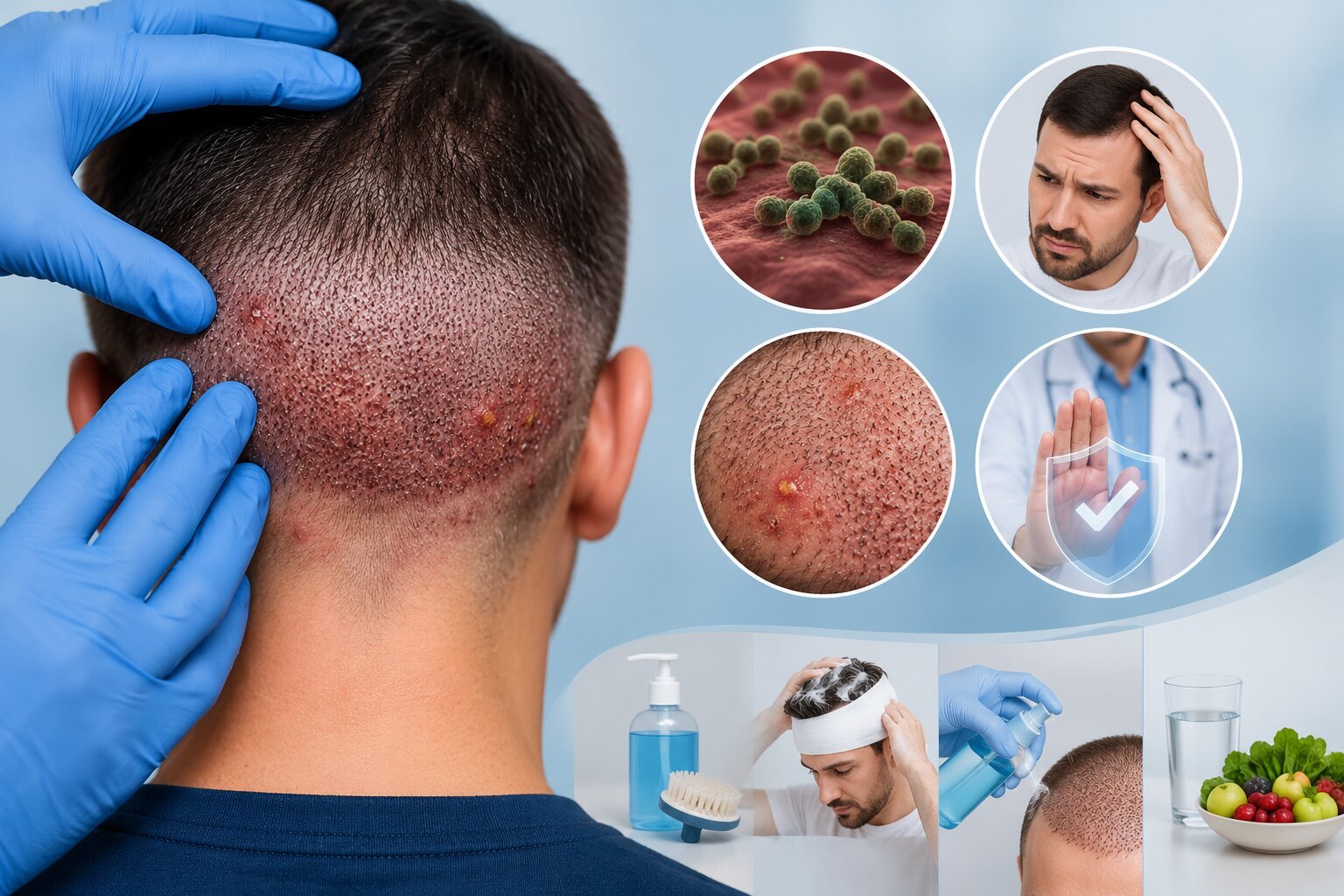
Hair transplantation has become one of the most effective and permanent solutions for hair loss. Thanks to modern techniques like FUE (Follicular Unit Extraction) and FUT (Follicular Unit Transplantation), the procedure is safer and more successful than ever before. However, like any surgical treatment, hair transplantation carries certain risks, including infection.
While hair transplant infections are relatively rare when performed by experienced surgeons, understanding their causes, warning signs, and prevention methods can help ensure a smooth recovery and optimal results.
In this guide, we’ll discuss everything you need to know about hair transplant infections and how to minimize the risk of complications.
What Is a Hair Transplant Infection?
A hair transplant infection occurs when bacteria, fungi, or other microorganisms enter the scalp during or after the procedure. These infections can affect the donor area, recipient area, or both, leading to discomfort, delayed healing, and, in severe cases, damage to newly transplanted hair follicles.
Fortunately, infection rates in professionally performed hair transplant procedures are extremely low due to sterile surgical protocols and post-operative care guidelines.
Common Causes of Hair Transplant Infection
1. Poor Surgical Hygiene
One of the leading causes of infection is inadequate sterilization of surgical instruments or an unclean operating environment. Clinics that fail to follow strict hygiene standards increase the risk of bacterial contamination.
2. Improper Post-Operative Care
Patients play a significant role in their recovery. Failing to follow aftercare instructions, touching the scalp with unwashed hands, or scratching the treated areas can introduce harmful bacteria.
3. Excessive Sweating
Heavy exercise, gym workouts, or outdoor activities immediately after surgery can expose the scalp to sweat and environmental contaminants, increasing infection risk.
4. Pre-Existing Scalp Conditions
Conditions such as dermatitis, psoriasis, folliculitis, or fungal infections may make the scalp more vulnerable to post-surgical complications if not managed properly before the procedure.
5. Weak Immune System
Individuals with diabetes, autoimmune disorders, or compromised immunity may have a higher risk of developing infections and slower healing.
Signs and Symptoms of Hair Transplant Infection
Early identification is crucial for successful treatment. Watch for the following symptoms:
- Persistent redness beyond the normal healing period
- Increasing pain or tenderness
- Swelling that worsens instead of improving
- Yellow or green discharge from the scalp
- Pus-filled bumps or abscesses
- Unpleasant odor from the treated area
- Fever or general illness
- Excessive itching accompanied by inflammation
While mild redness and swelling are normal after surgery, symptoms that intensify over time should never be ignored.
Potential Risks of Untreated Hair Transplant Infection
Ignoring an infection can lead to serious complications, including:
Damage to Transplanted Grafts
Infections may affect newly implanted follicles, reducing graft survival and compromising final hair density.
Delayed Healing
An infected scalp requires more time to recover, prolonging discomfort and increasing downtime.
Scarring
Severe infections can cause permanent scarring, potentially affecting future hair transplant procedures.
Poor Cosmetic Results
Infections may negatively impact hair growth patterns, resulting in uneven or unsatisfactory outcomes.
How to Prevent Hair Transplant Infection
Choose a Qualified Hair Transplant Surgeon
The most effective prevention strategy starts before the procedure. Select a reputable clinic with experienced surgeons, modern facilities, and strict sterilization protocols.
Follow Aftercare Instructions Carefully
Your surgeon will provide detailed post-operative guidelines. These may include:
- Taking prescribed antibiotics
- Using recommended shampoos
- Avoiding direct scalp contact
- Sleeping with your head elevated
- Attending follow-up appointments
Keep the Scalp Clean
Proper washing techniques help prevent bacteria buildup while protecting newly implanted grafts.
Avoid Smoking and Alcohol
Smoking and excessive alcohol consumption can impair healing and increase the risk of complications after surgery.
Avoid Swimming and Public Water Sources
Swimming pools, hot tubs, lakes, and other public water sources may contain bacteria that can infect healing scalp tissue.
Refrain From Intense Physical Activity
Most surgeons recommend avoiding strenuous exercise for at least one to two weeks following the procedure.
When Should You Contact Your Doctor?
Seek immediate medical attention if you experience:
- Severe pain
- Persistent swelling
- Fever
- Pus discharge
- Rapidly spreading redness
- Sudden deterioration of the treated area
Prompt treatment can prevent minor issues from becoming serious complications.
How Hair Transplant Infections Are Treated
Treatment depends on the severity of the infection and may include:
- Oral antibiotics
- Topical antibiotic creams
- Antifungal medications (if fungal infection is suspected)
- Professional scalp cleaning
- Drainage of abscesses in severe cases
Early diagnosis usually leads to quick resolution and minimal impact on hair transplant results.
Why Choosing the Right Surgeon Matters
Many hair transplant complications, including infections, are directly linked to the quality of the clinic and surgical team. An experienced specialist follows advanced sterilization standards, proper graft handling techniques, and evidence-based post-operative protocols to minimize risks.
This is where Tricho Talk can help.
Tricho Talk works like a trusted matching platform that helps individuals find the most suitable hair transplant specialist based on their unique needs. Instead of relying on advertisements or random online reviews, patients can explore expert recommendations and connect with experienced doctors who prioritize safety, natural-looking results, and long-term success.
Frequently Asked Questions (FAQs)
How common are hair transplant infections?
Hair transplant infections are uncommon when procedures are performed by qualified surgeons using proper sterile techniques.
Can infection cause transplanted hair to fall out?
Yes. Severe or untreated infections may damage transplanted follicles and affect hair growth outcomes.
How long after a hair transplant can an infection occur?
Most infections develop within the first few days to weeks after surgery, although delayed infections can occasionally occur.
Are antibiotics always prescribed after a hair transplant?
Many surgeons prescribe preventive antibiotics, but treatment plans vary depending on the patient’s condition and the clinic’s protocol.
Can I wash my hair after a hair transplant?
Yes, but only according to your surgeon’s instructions. Proper washing is an important part of infection prevention.
Final Thoughts
Hair transplant infection is a rare but important complication that every patient should understand before undergoing treatment. Choosing a qualified surgeon, following post-operative instructions, maintaining scalp hygiene, and recognizing warning signs early can significantly reduce the risk of infection.
If you’re considering a hair transplant, taking the time to find the right specialist is one of the most important decisions you’ll make. Platforms like Tricho Talk simplify this process by helping patients connect with experienced hair transplant doctors who prioritize safety, quality care, and successful outcomes.
A well-planned procedure combined with proper aftercare is the foundation for achieving healthy hair growth and long-lasting results.
Leave a reply