
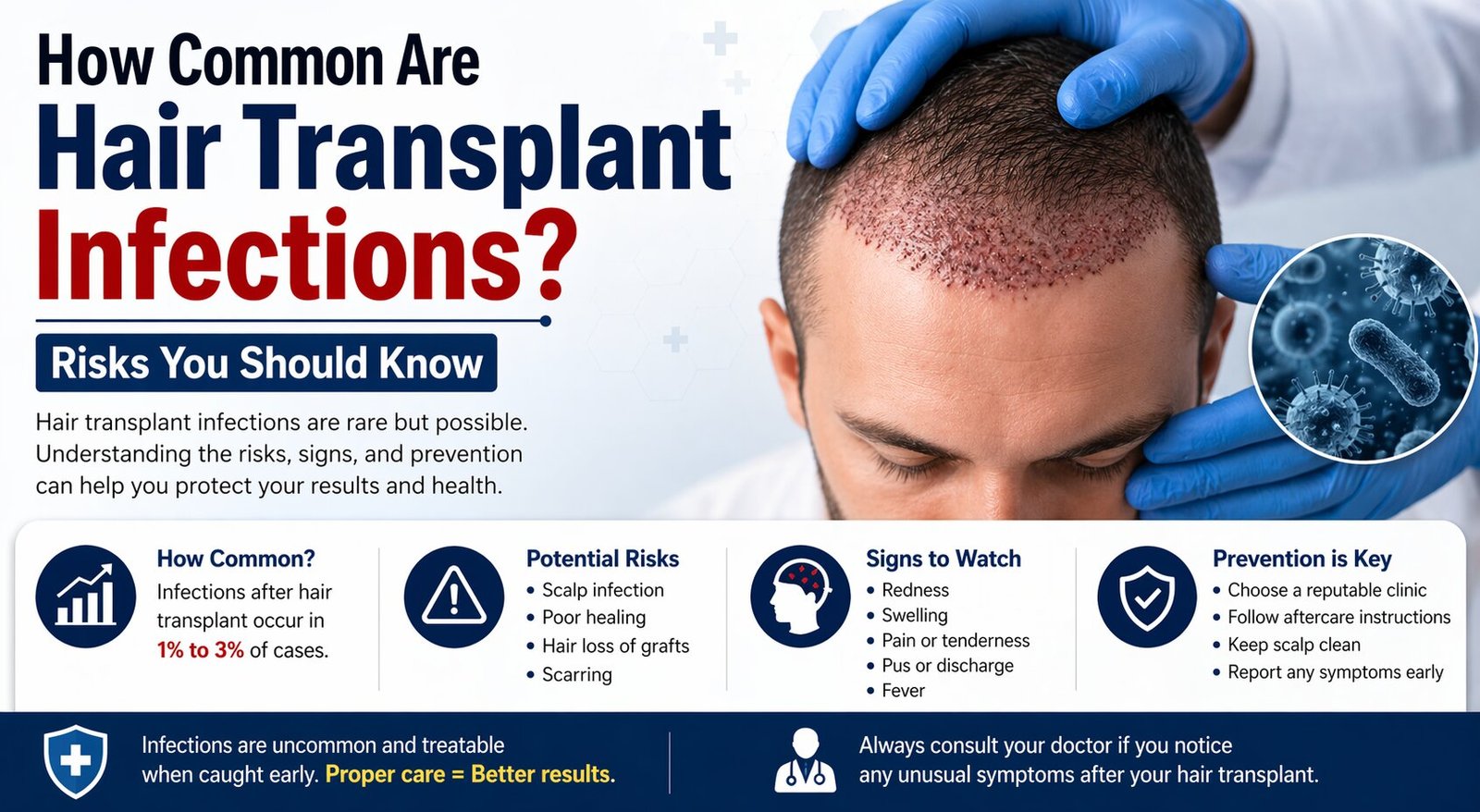
Hair restoration has come a long way, and today, a hair transplant is considered one of the most effective and permanent solutions for hair loss. However, like any medical procedure, it comes with certain risks-one of the most talked-about being infections.
If you’re considering a hair transplant, understanding how common infections are, what causes them, and how to prevent them can help you make a safe and confident decision.
Are Hair Transplant Infections Common?
The short answer is: no, infections are relatively rare.
When performed by a qualified and experienced surgeon in a sterile environment, the risk of infection after a hair transplant is less than 1%. Modern techniques such as FUE (Follicular Unit Extraction) and FUT (Follicular Unit Transplantation) are minimally invasive, which further reduces the chances of complications.
However, “rare” doesn’t mean impossible. Infections can still occur if proper hygiene, aftercare, or surgical protocols are not followed.
Why Do Infections Happen After a Hair Transplant?
Even though the procedure is safe, infections may develop due to several factors:
1. Poor Hygiene
If the scalp is not kept clean after the procedure, bacteria can enter the tiny incision sites and cause infection.
2. Unsterile Surgical Conditions
Choosing an unqualified clinic or poorly maintained facility increases the risk significantly.
3. Touching or Scratching the Scalp
After a hair transplant, the scalp is sensitive. Touching it with unclean hands can introduce bacteria.
4. Ignoring Aftercare Instructions
Patients who do not follow post-procedure guidelines-like washing routines or medication schedules-are more prone to complications.
5. Weak Immune System
People with certain health conditions or low immunity may have a slightly higher risk of infection.
Signs of Hair Transplant Infection
It’s important to identify early symptoms so that treatment can begin quickly. Watch out for:
- Excessive redness or swelling beyond the normal healing period
- Persistent pain or tenderness
- Yellow or green discharge (pus)
- Foul odor from the scalp
- Fever or general discomfort
Mild redness and slight swelling are normal after a hair transplant, but worsening symptoms should never be ignored.
Types of Infections After Hair Transplant
Although uncommon, a few types of infections may occur:
1. Folliculitis
This is the most common minor infection where hair follicles become inflamed. It usually appears as small red bumps and is easily treatable.
2. Bacterial Infection
Caused by bacteria entering the scalp, leading to swelling, pain, and pus formation.
3. Fungal Infection
Rare but possible, especially if the scalp remains moist or unhygienic for long periods.
How to Prevent Hair Transplant Infections
Prevention is always better than treatment. Here are some essential steps to minimize risk:
Choose the Right Clinic
Selecting a reputable clinic is the most important step. This is where platforms like Tricho Talk can help-they act like a casting system to connect you with the most suitable and experienced hair transplant doctors based on your needs.
Follow Aftercare Instructions Strictly
Your doctor will provide a detailed aftercare plan. This typically includes:
- Gentle washing techniques
- Avoiding direct sunlight
- Not wearing tight caps or helmets
- Taking prescribed antibiotics
Maintain Scalp Hygiene
Keep your scalp clean and avoid exposing it to dust or pollutants during the initial healing phase.
Avoid Physical Strain
Heavy workouts, sweating, and physical strain should be avoided for a few days after the procedure.
Don’t Touch or Scratch
Let the grafts settle naturally. Avoid picking scabs or scratching the scalp.
What Happens If an Infection Occurs?
If detected early, most hair transplant infections are easily treatable. Treatment may include:
- Oral or topical antibiotics
- Anti-inflammatory medications
- Proper scalp cleaning under medical supervision
In rare cases, if left untreated, infections can affect graft survival and impact the final results. That’s why timely consultation with your doctor is crucial.
Does Infection Affect Hair Transplant Results?
In most cases, no-if treated early.
However, severe or untreated infections can damage hair follicles, which may reduce the density or effectiveness of the transplant. This is why proper care and choosing the right specialist matter so much.
Expert Insight: Why Experience Matters
An experienced surgeon not only performs the procedure correctly but also ensures:
- Sterile surgical practices
- Proper graft handling
- Detailed patient guidance
This significantly lowers the risk of complications, including infections.
Platforms like Tricho Talk simplify this process by helping patients find trusted doctors, making the journey safer and more reliable.
Hair transplant infections are rare but preventable. With the right clinic, proper hygiene, and strict adherence to aftercare instructions, you can significantly reduce the risk and enjoy successful, natural-looking results.
If you’re planning a hair transplant, focus on quality over cost, choose experienced professionals, and follow expert advice carefully. A little caution goes a long way in ensuring a smooth and infection-free recovery.
Leave a reply