
Hair loss is no longer a condition people simply learn to live with. With advancements in medical science, hair transplant procedures have become a reliable and long-term solution for individuals experiencing thinning hair, receding hairlines, or bald patches. Today, thousands of people choose hair restoration not just for appearance, but for confidence and quality of life. If you are considering the procedure, understanding how it works and what success rates you can expect is essential.
This guide explains the complete process in a simple, medically accurate way and also highlights how platforms like Tricho Talk help patients connect with the right hair transplant specialist based on their specific condition.
What Is a Hair Transplant?
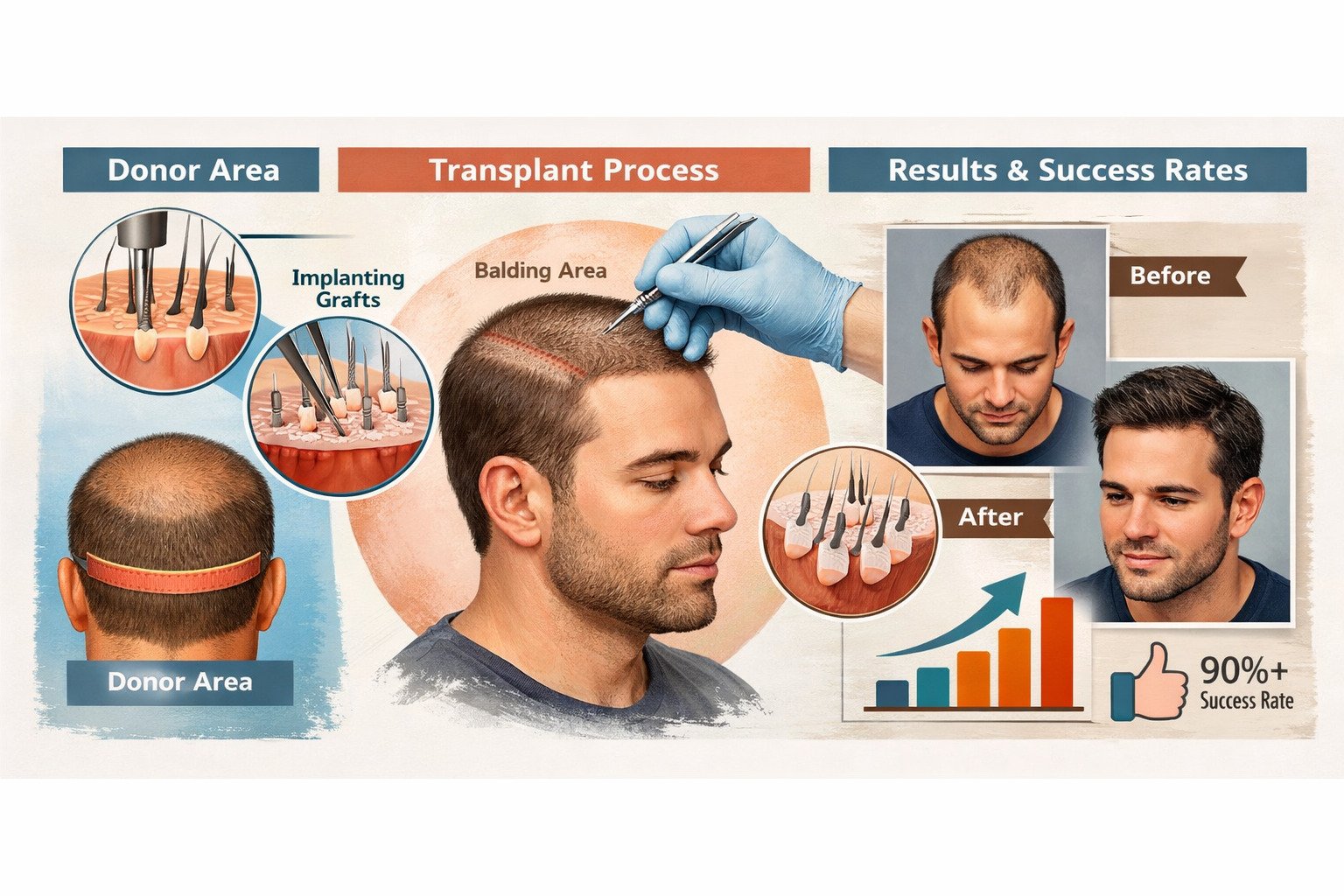
A hair transplant is a minimally invasive surgical procedure in which hair follicles are taken from a donor area, usually the back or sides of the scalp, and implanted into areas where hair is thinning or absent. Since these donor follicles are genetically resistant to hair loss, they continue to grow naturally even after being transplanted.
The result is natural-looking, permanent hair growth that blends with your existing hair.
Who Is an Ideal Candidate?
Hair transplant works best for individuals who have:
Stable hair loss
Adequate donor hair on the back or sides of the scalp
Realistic expectations
Good overall health
It is not recommended for people with active scalp diseases, severe uncontrolled medical conditions, or very poor donor hair density.
This is where Tricho Talk becomes useful. Instead of choosing a clinic randomly, patients get guided toward the most suitable doctor based on hair loss stage, donor availability, age, and treatment goals.
Hair Transplant Techniques
There are two primary methods used by modern hair transplant surgeons.
FUE (Follicular Unit Extraction)
In FUE, individual hair follicles are extracted one by one from the donor area and implanted into the recipient area. This technique leaves tiny dot-like scars that are barely visible and has a faster healing time.
It is ideal for people who prefer short hairstyles and want minimal scarring.
FUT (Follicular Unit Transplantation)
In FUT, a thin strip of scalp is removed from the donor area, and hair follicles are separated and implanted. This method allows transplantation of a large number of grafts in a single session and is often recommended for advanced baldness.
Both techniques provide natural results when performed by an experienced surgeon.
Step-by-Step Hair Transplant Procedure
The process typically begins with a detailed scalp analysis. The doctor evaluates hair density, donor strength, scalp elasticity, and the pattern of hair loss. Based on this, a customized hairline design is created to ensure natural results.
On the day of the procedure, local anesthesia is administered so the treatment is painless. The surgeon then extracts healthy follicles from the donor area and carefully implants them into tiny incisions in the recipient area, following the natural angle and direction of hair growth.
The procedure can take four to eight hours depending on the number of grafts required. Most patients return home the same day.
Recovery and Hair Growth Timeline
After the transplant, mild redness and scabbing may appear for a few days. These are temporary and usually resolve within a week.
During the first month, the transplanted hair may shed. This is completely normal and part of the natural growth cycle. New hair growth typically begins around three to four months after the procedure.
Noticeable improvement is seen by six months, and full results usually appear between nine to twelve months.
Hair Transplant Success Rates
Hair transplant has one of the highest success rates among cosmetic procedures when performed by a qualified and experienced surgeon.
On average:
Ninety to ninety-five percent of transplanted grafts survive
Natural hair growth continues for a lifetime
Patient satisfaction rates are very high
Success depends on several factors, including surgeon expertise, donor hair quality, proper graft handling, and post-procedure care.
Choosing the right doctor is therefore the most important decision. Platforms like Tricho Talk simplify this process by acting as a trusted bridge between patients and top-rated hair transplant surgeons. Instead of marketing-driven clinic selection, patients receive recommendations based on medical suitability and expected outcomes.
Factors That Influence Results
While the procedure is highly successful, outcomes vary from person to person. The most important factors include:
Donor hair density and thickness
Stage of baldness
Scalp condition and blood supply
Surgeon’s experience and technique
Patient’s adherence to aftercare instructions
A well-planned procedure with proper graft distribution and natural hairline design plays a crucial role in achieving dense, aesthetically pleasing results.
Is Hair Transplant Permanent?
Yes, transplanted hair is generally permanent because it comes from areas genetically resistant to hair loss. However, existing non-transplanted hair may continue to thin over time. This is why doctors often recommend medical treatments to maintain overall hair density.
Common Myths About Hair Transplant
Many people still believe that hair transplant results look artificial. Modern techniques have completely changed this perception. When performed correctly, transplanted hair grows naturally and is indistinguishable from original hair.
Another myth is that the procedure is extremely painful. In reality, local anesthesia ensures a comfortable experience, and most patients report only mild discomfort.
Why Proper Consultation Matters
Hair transplant is not a one-size-fits-all treatment. The number of grafts, technique selection, hairline design, and future hair loss planning must be customized for each patient.
This is why consultation plays a critical role. Tricho Talk works like a medical matchmaking platform, evaluating your condition and suggesting the most suitable doctor rather than promoting a single clinic. This increases the chances of achieving optimal, long-lasting results.
Final Thoughts
Hair transplant is a safe, effective, and permanent solution for hair loss when performed by a skilled specialist. With success rates as high as ninety-five percent, it offers natural-looking results and long-term confidence.
However, the key to success lies in proper diagnosis, correct technique selection, and choosing the right surgeon. Using a trusted consultation platform like Tricho Talk ensures that you are guided to the best doctor for your specific hair restoration needs.
Leave a reply