
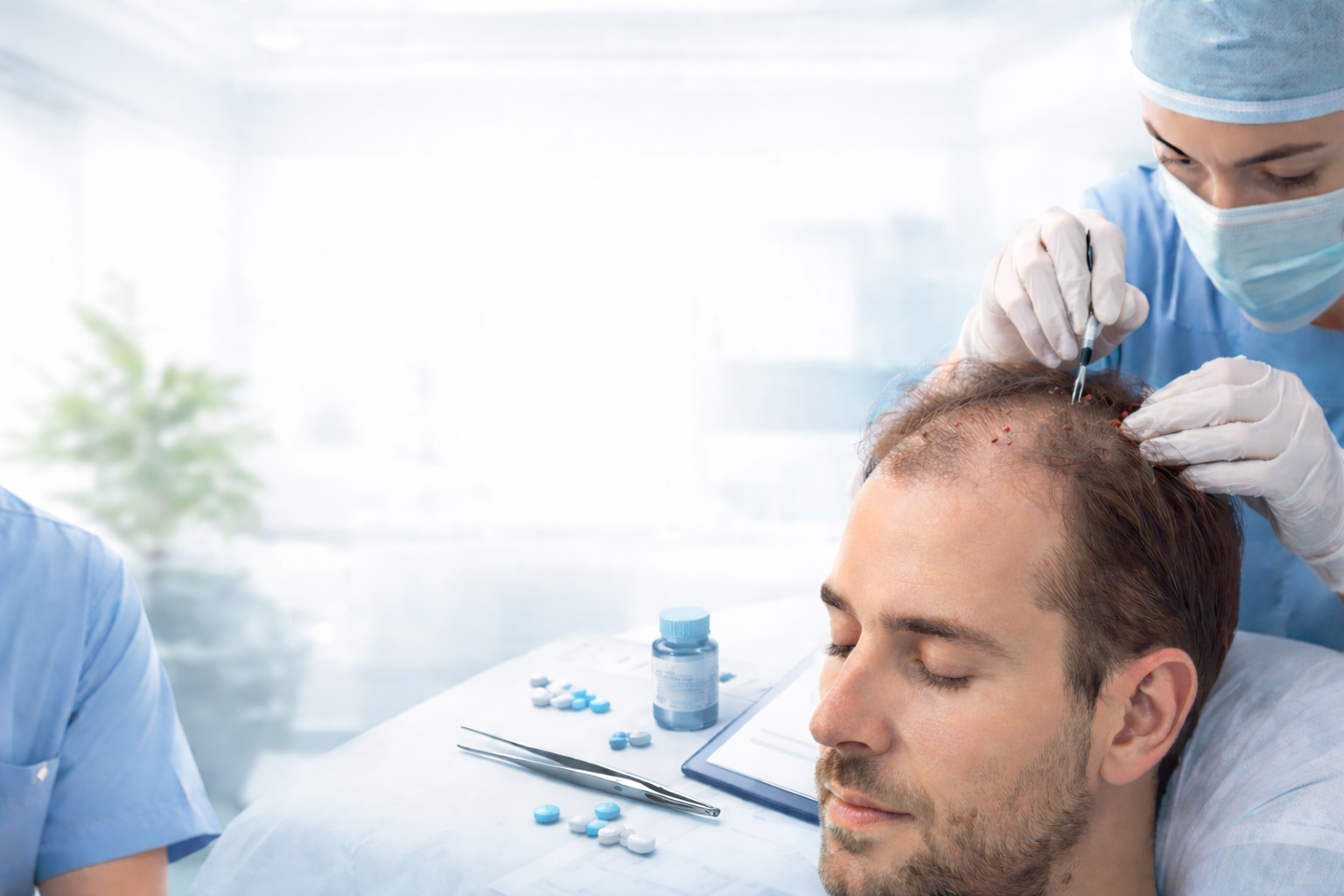
Hair transplants have moved from being a taboo cosmetic procedure to one of the most commonly performed aesthetic treatments worldwide. Yet, despite medical advancements, doubts around safety still circulate online. At Tricho Talk, we often hear concerns rooted more in myths than in medical facts. This fact-check blog breaks down those misconceptions and explains the real safety profile of modern hair transplant procedures.
Myth #1: Do Hair Transplants Affect Organs?
One of the most persistent myths is that hair transplants can damage internal organs such as the brain, heart, or kidneys. Medically, this claim has no basis. Hair transplant procedures work exclusively at the scalp level, targeting hair follicles within the skin’s dermal layer. There is no interaction with nerves connected to vital organs, nor any systemic impact on the body.
Local anesthesia is used only on the scalp, and it does not travel or interfere with organ function. At Tricho Talk, we emphasize patient education because understanding how superficial and localized the procedure truly is often puts this fear to rest immediately.
Myth #2: Hair Transplants Always Carry High Risks
Another widespread belief is that hair transplants are inherently dangerous. In reality, when performed by trained professionals using modern techniques like FUE (Follicular Unit Extraction), the procedure is considered minimally invasive with a very low complication rate.
Temporary effects such as mild swelling, redness, or itching are common and expected, resolving within days. Serious complications are rare and usually linked to unqualified clinics or poor post-procedure care. With proper screening, hygiene, and medical supervision, hair transplants are among the safest cosmetic procedures available today.
The Most Pernicious Myths: Debunked
Many fears surrounding hair transplants come from outdated information or exaggerated online anecdotes. Myths about permanent pain, unnatural results, or lifelong medication requirements are no longer relevant in today’s medical landscape.
Modern hair transplantation focuses on precision, natural hairline design, and long-term follicle survival. At Tricho Talk, we see that most dissatisfaction stems not from the procedure itself, but from unrealistic expectations or choosing clinics without adequate expertise.
Tricho Talk: Safety Guaranteed Through Experience
At Tricho Talk, safety is not a claim-it’s a process. As a consulting-focused brand, we guide individuals through clinic selection, doctor credentials, technique suitability, and realistic outcome planning. Our role is to ensure that patients make informed decisions rather than rushed ones.
Years of industry insight allow us to identify best practices, ethical clinics, and evidence-based approaches. When hair transplants are planned correctly, they are not only safe but also life-enhancing.
FAQs
Is hair transplant surgery painful?
The procedure is performed under local anesthesia, making it virtually painless. Mild discomfort may occur during recovery.
Are hair transplants permanent?
Yes, transplanted follicles are typically resistant to hair loss and offer long-term results when done correctly.
Who should avoid hair transplants?
Individuals with certain medical conditions or unrealistic expectations should consult thoroughly before proceeding.
How long is the recovery period?
Most people resume normal activities within a few days, with visible growth beginning after a few months.
Conclusion: Safe, Gentle, and Proven
So, are hair transplants safe? The evidence says yes-when done the right way. The procedure does not affect organs, does not carry high inherent risks, and has a strong safety record backed by decades of medical practice.
At Tricho Talk, we believe clarity is the first step toward confidence. By separating myths from facts, individuals can approach hair restoration with assurance, realism, and peace of mind. Hair transplants today are safe, gentle, and proven-science, not speculation, confirms it.
Leave a reply