
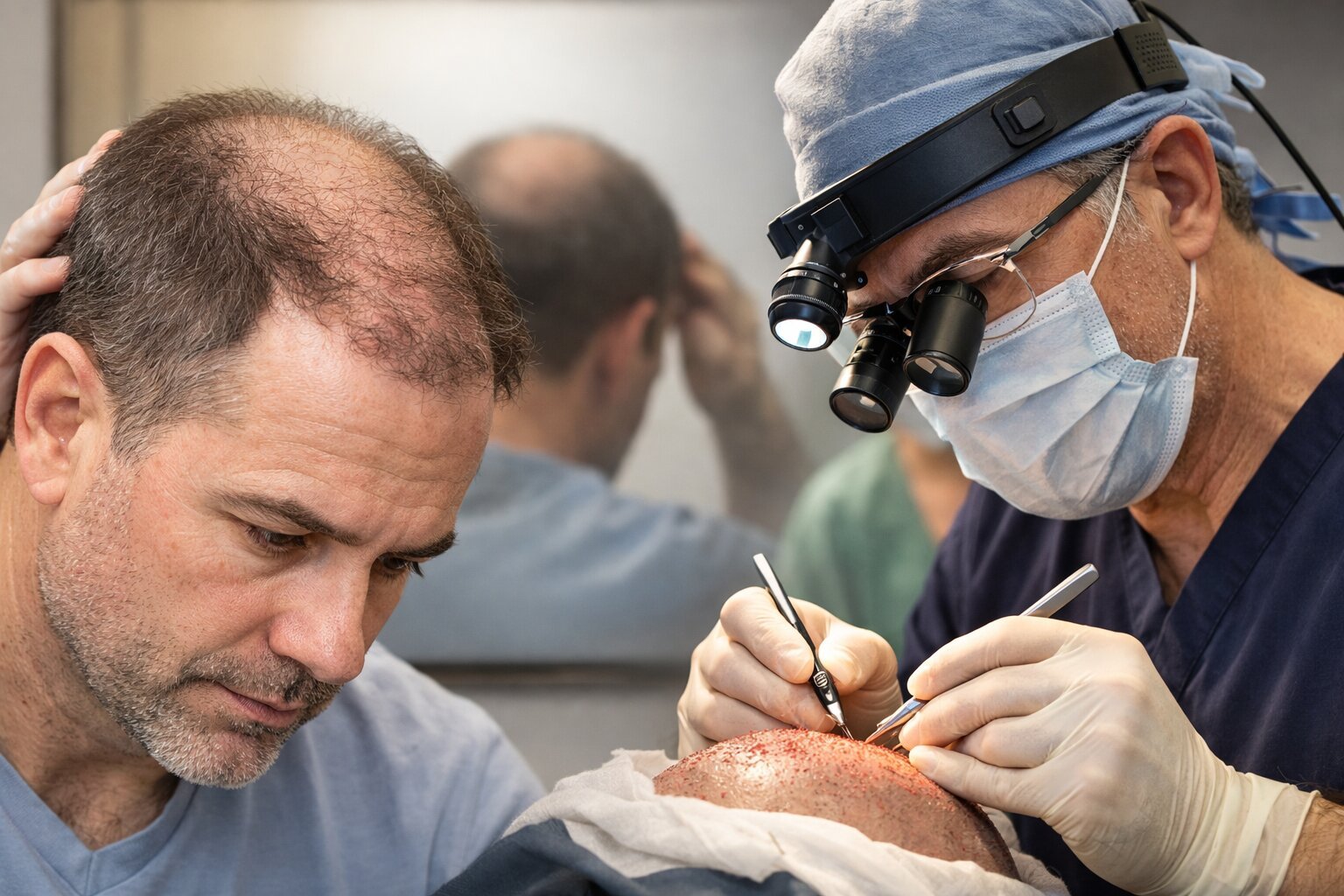
Hair transplant repair is one of the most delicate and technically demanding procedures in modern aesthetic medicine. Unlike a first-time hair transplant, repair cases involve correcting previous mistakes-such as unnatural hairlines, poor graft placement, scarring, or low graft survival. That’s why choosing the right surgeon is not just important-it’s critical.
If you’re considering a corrective procedure, understanding why expertise matters can help you avoid further complications and achieve natural, lasting results.
Understanding Hair Transplant Repair
Hair transplant repair is performed to fix unsatisfactory outcomes from earlier procedures. These issues may include:
- Unnatural or pluggy hairline
- Low hair density or patchy growth
- Visible scarring (especially from FUT procedures)
- Incorrect graft direction or angle
- Overharvesting in donor areas
Repairing these problems requires advanced planning, artistic precision, and deep clinical experience-far beyond what a standard transplant demands.
Why Surgeon Expertise Matters More in Repair Cases
1. Limited Donor Hair Availability
In repair procedures, the donor area (usually the back of the scalp) may already be partially depleted. A skilled surgeon knows how to:
- Optimize remaining grafts
- Avoid further damage to the donor area
- Use alternative techniques like body hair transplantation if needed
An inexperienced surgeon can worsen the situation by overharvesting or mismanaging grafts.
2. Correction of Previous Mistakes Requires Precision
Hair transplant repair is not just about adding more hair-it’s about correcting design flaws. This includes:
- Redesigning a natural-looking hairline
- Adjusting graft angles and direction
- Blending old and new grafts seamlessly
Only a highly experienced surgeon can combine technical skill with aesthetic judgment.
3. Scar Management and Camouflage
Many patients seeking repair have visible scars from previous surgeries. A qualified surgeon can:
- Camouflage scars using grafts
- Use advanced techniques like FUE extraction from scar tissue
- Recommend complementary treatments like scalp micropigmentation
Poor handling of scar tissue can lead to poor graft survival.
4. Higher Risk of Complications
Repair cases carry higher risks, including:
- Lower graft survival rate
- Poor blood supply in previously treated areas
- Increased chances of further scarring
An expert surgeon understands these risks and plans accordingly to minimize complications.
5. Customized Treatment Planning
No two repair cases are the same. A skilled surgeon will:
- Analyze your previous procedure
- Assess donor area condition
- Create a long-term restoration strategy
This level of personalization is essential for achieving natural and sustainable results.
Common Mistakes Patients Make When Choosing a Surgeon
Many patients make the mistake of choosing based on:
- Low cost
- Aggressive marketing
- Quick promises of “fixing everything in one session”
Hair transplant repair is not a one-size-fits-all procedure. Choosing the wrong surgeon again can lead to irreversible damage.
How Tricho Talk Helps You Find the Right Surgeon
Finding a trustworthy and skilled surgeon can be overwhelming-especially after a bad experience. This is where Tricho Talk plays a crucial role.
Tricho Talk works like a casting platform, helping patients connect with the most suitable hair transplant specialists based on their specific needs. Instead of randomly choosing a clinic, you get:
- Expert-backed doctor recommendations
- Access to experienced and verified surgeons
- Guidance tailored to your repair case
- A more informed and confident decision-making process
This approach significantly reduces the risk of choosing the wrong surgeon again.
Key Factors to Consider When Choosing a Hair Transplant Repair Surgeon
Before making your decision, evaluate the following:
Experience in Repair Cases
Not all surgeons specialize in repair procedures. Always check their past repair work.
Before-and-After Results
Look for real patient results, especially cases similar to yours.
Technique Expertise
Ensure the surgeon is skilled in advanced techniques like FUE, graft redistribution, and scar correction.
Consultation Transparency
A good surgeon will set realistic expectations and explain limitations clearly.
Patient Reviews & Reputation
Research testimonials and independent feedback.
Final Thoughts
Hair transplant repair is your second chance at restoring not just your hair, but also your confidence. However, this opportunity comes with higher stakes and fewer margins for error.
Choosing the right surgeon is the single most important decision you’ll make in this journey. With expert guidance platforms like Tricho Talk, you can avoid repeating past mistakes and move toward results that look natural, balanced, and permanent.
Leave a reply