
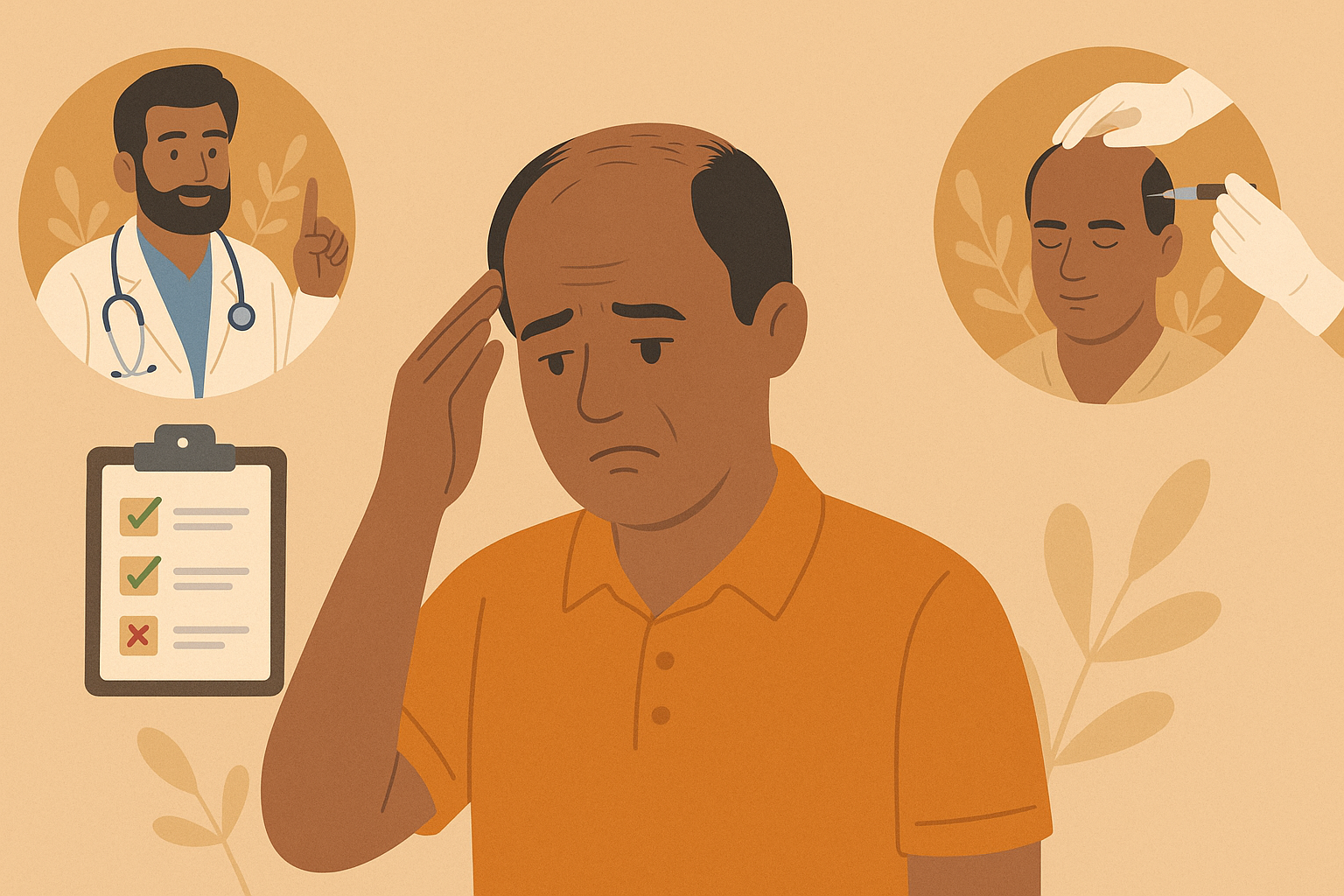
Hair loss is a growing concern for both men and women in India. For many, a hair transplant seems like a reliable solution to restore a fuller hairline and regain confidence. But a common question is: is hair transplant safe for everyone? The answer depends on several factors, including age, health, and hair suitability. In this guide, we will help you understand who can undergo a hair transplant safely, precautions to take, and how to get the best results.
What is a Hair Transplant?
A hair transplant is a surgical procedure that moves hair follicles from one part of the body, usually the back or sides of the scalp, to areas with thinning or no hair. Modern techniques such as Follicular Unit Extraction (FUE) and Follicular Unit Transplantation (FUT) have made hair transplant safer, less invasive, and more effective.
In India, particularly in cities like Delhi, hair transplant clinics have become more advanced, offering world-class facilities, skilled surgeons, and personalised treatment plans. However, not everyone is automatically a suitable candidate.
Who Can Safely Undergo a Hair Transplant?
Age Matters
Age plays an important role in hair transplant safety and effectiveness. Most experts recommend candidates be above 25 years old. This is because hair loss patterns need time to stabilise. Transplanting hair too early can lead to unnatural hairlines later in life.
Health and Medical Conditions
Your overall health affects how safely you can undergo a hair transplant. People with conditions such as uncontrolled diabetes, heart problems, or bleeding disorders may face higher risks. A full medical check-up before surgery is essential to ensure safety. Healthy individuals generally experience smoother procedures and faster recovery.
Hair and Scalp Suitability
The quality and density of donor hair are critical for success. Ideal candidates have healthy hair on the back or sides of the scalp. People with diffuse thinning or autoimmune conditions like alopecia areata may not achieve optimal results and should explore alternatives or discuss a tailored plan with their surgeon.
Who Should Approach Hair Transplant with Caution?
- Young adults under 25: Hair loss pattern may not be stable, affecting results.
- People with serious health issues: Conditions like heart disease or autoimmune disorders increase surgical risks.
- Those with unrealistic expectations: Hair transplant increases hair density but does not give the same volume as natural hair.
Safety Measures During Hair Transplant
Hair transplant, when performed by an experienced team, is generally safe. Key safety measures include:
- Pre-surgery consultation: Full evaluation of hair loss, scalp health, and medical history.
- Use of local anaesthesia: Most procedures in Delhi are done under local anaesthesia, reducing risks.
- Experienced surgeons: Skilled teams ensure natural-looking results.
- Post-surgery care: Following doctor’s instructions helps prevent infection and speeds recovery.
Benefits of Hair Transplant
- Restores natural-looking hairline
- Boosts confidence and self-esteem=
- Long-lasting solution compared to medications
- Minimally invasive with modern techniques
Risks and Side Effects
While rare, some side effects may occur:
- Temporary redness, swelling, or scabbing
- Minor hair shedding at the transplant site
- Infection if aftercare is not followed
- Temporary scalp discomfort
Proper pre-surgery evaluation and post-operative care minimise these risks.
Choosing the Right Hair Transplant Clinic in Delhi
Delhi has several reputed hair transplant clinics. Keep these points in mind while choosing:
- Check surgeon’s experience and certifications
- Review before-and-after results of past patients
- Ensure transparency in consultation, procedure, and pricing
- Discuss post-operative care and realistic expectations
FAQs About Hair Transplant
1. Is hair transplant safe for women?
Yes, women can undergo hair transplant if they have stable hair loss and sufficient donor hair.
2. Can people with high blood pressure undergo hair transplant?
Yes, if blood pressure is controlled. Uncontrolled conditions need medical clearance first.
3. How long is recovery after a hair transplant?
Initial healing takes 7–10 days. Noticeable hair growth appears in 3–4 months, with full results in 9–12 months.
4. Will hair transplant leave scars?
Modern FUE technique leaves minimal to no visible scars. FUT may leave a thin linear scar covered by hair.
5. Can hair transplant be repeated?
Yes, additional sessions are possible if there is enough donor hair, usually after hair loss stabilises.
6. Is the procedure painful?
Local anaesthesia ensures minimal pain during the procedure. Mild soreness may occur after surgery.
Hair transplant is a safe and effective way to restore hair for many people, but it is not suitable for everyone. Age, health, hair quality, and realistic expectations are key factors in determining suitability. Consulting an experienced hair transplant surgeon in Delhi will help you make the right decision, ensuring natural results and a safe procedure.
Leave a reply