
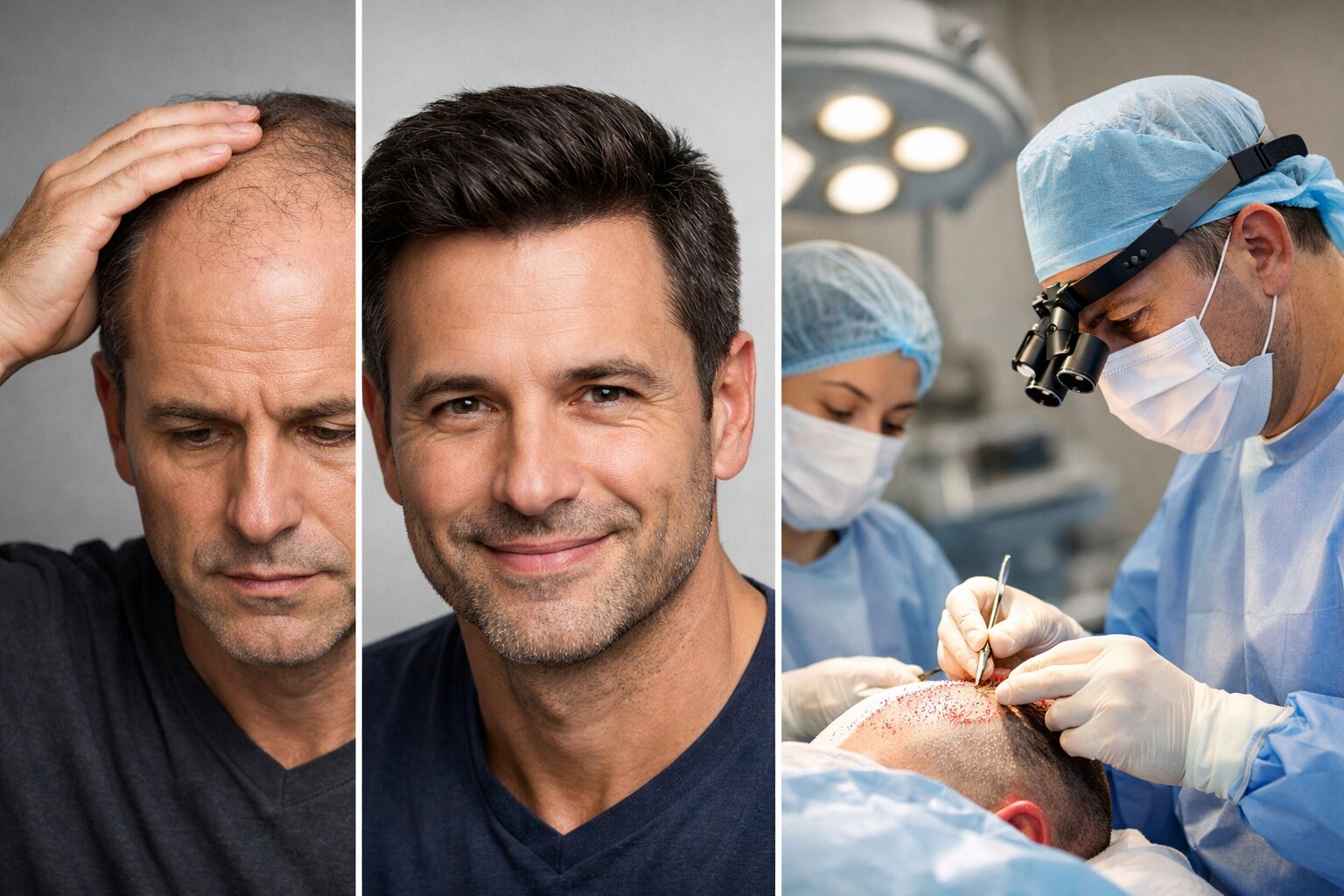
Hair loss affects millions of men and women worldwide, often impacting confidence and self-image. With modern cosmetic procedures becoming more accessible, hair transplant has emerged as one of the most reliable solutions for long-term hair restoration. But one of the most common questions patients ask is: Is hair transplant permanent?
In this comprehensive guide, we explain how hair transplants work, whether the results last forever, and what factors influence long-term success.
Understanding How a Hair Transplant Works
A hair transplant is a surgical procedure that involves moving healthy hair follicles from one part of the scalp (usually the back or sides, known as the donor area) to areas experiencing thinning or baldness (the recipient area).
The two most widely used techniques are:
- FUE (Follicular Unit Extraction): Individual hair follicles are extracted and implanted.
- FUT (Follicular Unit Transplantation): A strip of scalp is removed, and follicles are separated and transplanted.
The key principle behind hair transplantation is that donor hairs are genetically resistant to hair loss. When these follicles are relocated, they usually retain this resistance in their new location.
Is Hair Transplant Permanent?
Yes, in most cases, hair transplant results are permanent. The transplanted follicles are taken from areas that are genetically resistant to male or female pattern baldness. Once these follicles establish themselves in the new area, they continue to grow hair for a lifetime.
However, permanence does not mean that your hair will never change again. While transplanted hair typically remains, existing natural hair around the transplanted area may continue to thin over time due to ongoing hair loss.
What Happens to Transplanted Hair After Surgery?
Understanding the hair growth cycle after a transplant helps explain why results are considered permanent.
1. Initial Shedding (Shock Loss)
Within the first few weeks after surgery, the transplanted hair often falls out. This is a normal part of the process called shock loss and does not mean the transplant has failed.
2. Dormant Phase
After shedding, the follicles enter a resting phase that may last several weeks to a few months.
3. New Hair Growth
New hair typically begins to grow around 3-4 months after the procedure, with noticeable improvements by 6-9 months.
4. Final Results
Full results are usually visible within 12 to 18 months, when the hair appears thicker and more natural.
Why Transplanted Hair Is Considered Permanent
Hair at the back of the scalp is resistant to the hormone DHT (dihydrotestosterone), which is responsible for pattern baldness. When these resistant follicles are transplanted, they continue behaving the same way in their new location. This is why the results are long-lasting and often lifelong.
Factors That Affect the Longevity of Hair Transplant Results
Although transplanted hair is permanent, several factors influence how natural and long-lasting the overall appearance remains.
1. Ongoing Hair Loss
A transplant does not stop future hair loss in untreated areas. Patients may require medical treatments or additional sessions to maintain density.
2. Surgeon’s Skill and Technique
The experience of the surgeon plays a major role in:
- graft survival rate
- natural hairline design
- density and direction of growth
Poor technique can lead to unnatural or short-lived results.
3. Patient’s Age and Hair Pattern
Younger patients may continue losing hair as they age, which can create uneven density if future hair loss is not managed properly.
4. Post-Surgery Care
Following aftercare instructions-such as avoiding direct sunlight, not scratching the scalp, and using prescribed medications-ensures better graft survival.
Can a Hair Transplant Fail?
Hair transplant procedures have a high success rate, often above 90%, but failure is still possible in rare cases. Common causes include:
- improper graft handling
- infection or poor aftercare
- underlying medical conditions
Choosing a qualified and experienced surgeon significantly reduces these risks.
Do You Need More Than One Hair Transplant?
Some patients may require multiple sessions, especially if:
- they have extensive baldness
- they continue to lose natural hair over time
- they want higher density or refinement of the hairline
This does not mean the first transplant failed-it simply means additional coverage is desired.
How Long Does Transplanted Hair Last?
Once fully grown, transplanted hair behaves like natural hair. It can be:
- washed
- cut
- styled
- and even dyed
In most cases, transplanted hair continues growing for decades, making it one of the most permanent solutions available for hair loss.
Is Hair Transplant a One-Time Solution?
A hair transplant is often described as a permanent solution, but it should be viewed as a long-term management strategy rather than a one-time fix. Maintaining results may involve:
- medications such as minoxidil or finasteride
- follow-up procedures for added density
- regular scalp care
Who Is the Best Candidate for Permanent Results?
You are likely to achieve long-lasting results if you:
- have stable hair loss
- possess a strong donor area
- are in good overall health
- follow medical advice before and after surgery
A proper consultation helps determine whether you are an ideal candidate.
Final Thoughts
So, is hair transplant permanent? The answer is yes-transplanted hair is generally permanent and continues to grow for a lifetime. However, maintaining a natural and dense appearance depends on factors such as ongoing hair loss, surgical expertise, and post-procedure care.
Hair transplantation remains one of the most effective and scientifically proven solutions for restoring hair and confidence. If you are considering the procedure, consulting a qualified specialist and understanding realistic expectations are the first steps toward successful, long-lasting results.
Leave a reply