
Hair loss affects confidence, appearance, and sometimes even mental well-being. Because of this, many people today consider a hair transplant in Delhi as a permanent solution to baldness. Delhi has become one of India’s leading hubs for advanced hair restoration procedures due to experienced surgeons and modern clinics.
However, before choosing a hair transplant, it is important to understand the possible side effects, risks, and long-term expectations. Being informed helps you make safer and smarter decisions.
Understanding Hair Transplant Surgery
A hair transplant is a surgical procedure where healthy hair follicles are taken from a donor area (usually the back of the scalp) and implanted into bald or thinning areas. The two most common techniques are:
- FUE (Follicular Unit Extraction) – individual follicles are extracted
- FUT (Follicular Unit Transplantation) – a strip of scalp is removed and dissected into grafts
Both techniques are widely available in Delhi and are considered safe when performed by qualified doctors.
Why Delhi Is a Popular Destination for Hair Transplants
Many patients choose hair transplant in Delhi because of:
- Availability of experienced dermatologists and plastic surgeons
- Advanced medical infrastructure
- Competitive pricing compared to international clinics
- Access to modern techniques like robotic FUE
This is why demand for hair transplants in Delhi has grown rapidly in recent years.
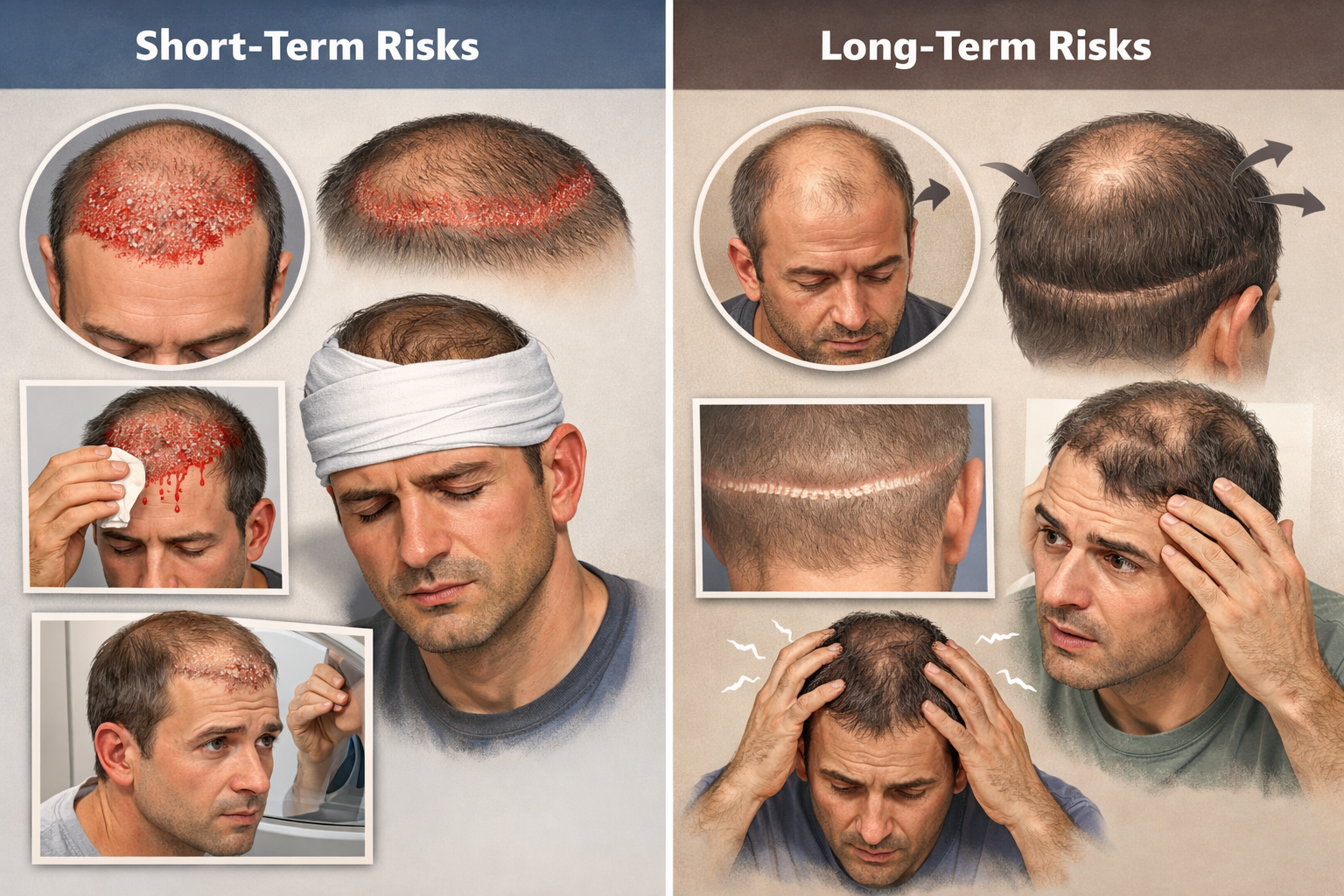
Short-Term Side Effects After Hair Transplant
Short-term side effects are common and usually temporary. Most patients recover within a few days to weeks.
1. Swelling and Redness
Mild swelling around the forehead and scalp is normal and usually subsides within 2–5 days.
2. Pain or Discomfort
Some tightness or soreness may be felt in the donor and recipient areas after surgery, especially in FUT procedures.
3. Scabbing and Crusting
Small scabs form around transplanted follicles as part of the healing process. These usually fall off within 7–10 days.
4. Temporary Numbness
Some patients experience numbness or reduced sensation in the scalp due to nerve irritation. This typically resolves over time.
5. Shock Loss (Temporary Hair Shedding)
Many people panic when transplanted hair falls out a few weeks after surgery. This is called shock loss and is a normal phase before new hair starts growing.
Long-Term Risks of Hair Transplant
Although hair transplant procedures are generally safe, long-term risks may occur if the surgery is performed improperly or if aftercare is neglected.
1. Scarring
- FUT may leave a linear scar on the donor area
- FUE leaves tiny dot scars that are usually less visible
2. Uneven or Unnatural Hair Growth
Poor graft placement or inexperienced surgeons can lead to unnatural hairlines or patchy density.
3. Permanent Nerve Damage (Rare)
In rare cases, patients may experience long-lasting numbness or altered sensation if nerves are damaged during surgery.
4. Infection and Folliculitis
Infections are uncommon but possible if hygiene is not maintained or aftercare instructions are ignored.
5. Donor Area Thinning
If too many follicles are extracted, the donor area may appear thin permanently.
Are Hair Transplants Permanent?
Yes, transplanted hair is usually permanent because the follicles are taken from areas resistant to hair loss. However, natural hair around transplanted grafts may continue to thin with age, which can affect overall density.
Who Is at Higher Risk of Complications?
You may face higher risks if you:
- Choose unqualified or unregistered clinics
- Have uncontrolled diabetes or scalp infections
- Smoke heavily or do not follow post-surgery instructions
Choosing the right surgeon is one of the most important factors in preventing complications.
How Tricho Talk Helps You Find the Right Doctor
Choosing a clinic can be confusing because Delhi has hundreds of hair transplant providers. This is where Tricho Talk becomes useful.
Tricho Talk works like a casting platform – instead of promoting just one clinic, it evaluates your condition and suggests the most suitable and experienced hair transplant doctor for your specific needs.
This helps patients:
- Avoid fake marketing claims
- Compare qualified specialists
- Receive unbiased doctor recommendations
In short, Tricho Talk simplifies the process of selecting the right doctor for your hair transplant in Delhi.
Tips to Reduce Hair Transplant Risks
To ensure safe and successful results:
- Always verify the doctor’s qualifications and experience
- Choose clinics that follow sterile surgical protocols
- Avoid very cheap packages that compromise medical quality
- Follow all post-operative instructions carefully
- Attend follow-up consultations regularly
These steps significantly reduce the chances of both short-term and long-term complications.
Recovery Timeline After Hair Transplant
A typical healing timeline looks like this:
- Day 1-3: swelling, redness, mild pain
- Day 7-10: scabs fall off
- Week 3-6: shock loss phase
- Month 3-4: new hair growth begins
- Month 9-12: visible final results
Patience is important because full results take up to one year.
FAQs: Hair Transplant Side Effects and Safety
Is hair transplant in Delhi safe?
Yes, when performed by experienced surgeons in certified clinics, hair transplants are considered safe with minimal risks.
How long do side effects last after a hair transplant?
Most side effects like swelling, redness, and scabbing disappear within 1–2 weeks. Shock loss may last a few months but is temporary.
Can a hair transplant fail?
Yes, grafts may fail if handled improperly, infected, or if the patient does not follow aftercare instructions.
Is hair transplant painful?
The procedure is done under local anaesthesia, so pain during surgery is minimal. Mild discomfort may occur after the anaesthesia wears off.
Are hair transplant scars permanent?
FUT scars are permanent but can be hidden by surrounding hair. FUE scars are tiny and usually not noticeable.
When can I return to work after a hair transplant?
Most patients resume normal work within 3-5 days, depending on the type of procedure and healing speed.
Does Tricho Talk charge for recommending doctors?
Tricho Talk mainly works as a recommendation and matching platform, helping patients connect with suitable doctors based on their hair loss condition and treatment goals.
Final Thoughts
A hair transplant in Delhi can be life-changing when done correctly. While side effects and risks exist, most of them are temporary and manageable with proper medical care.
Leave a reply