
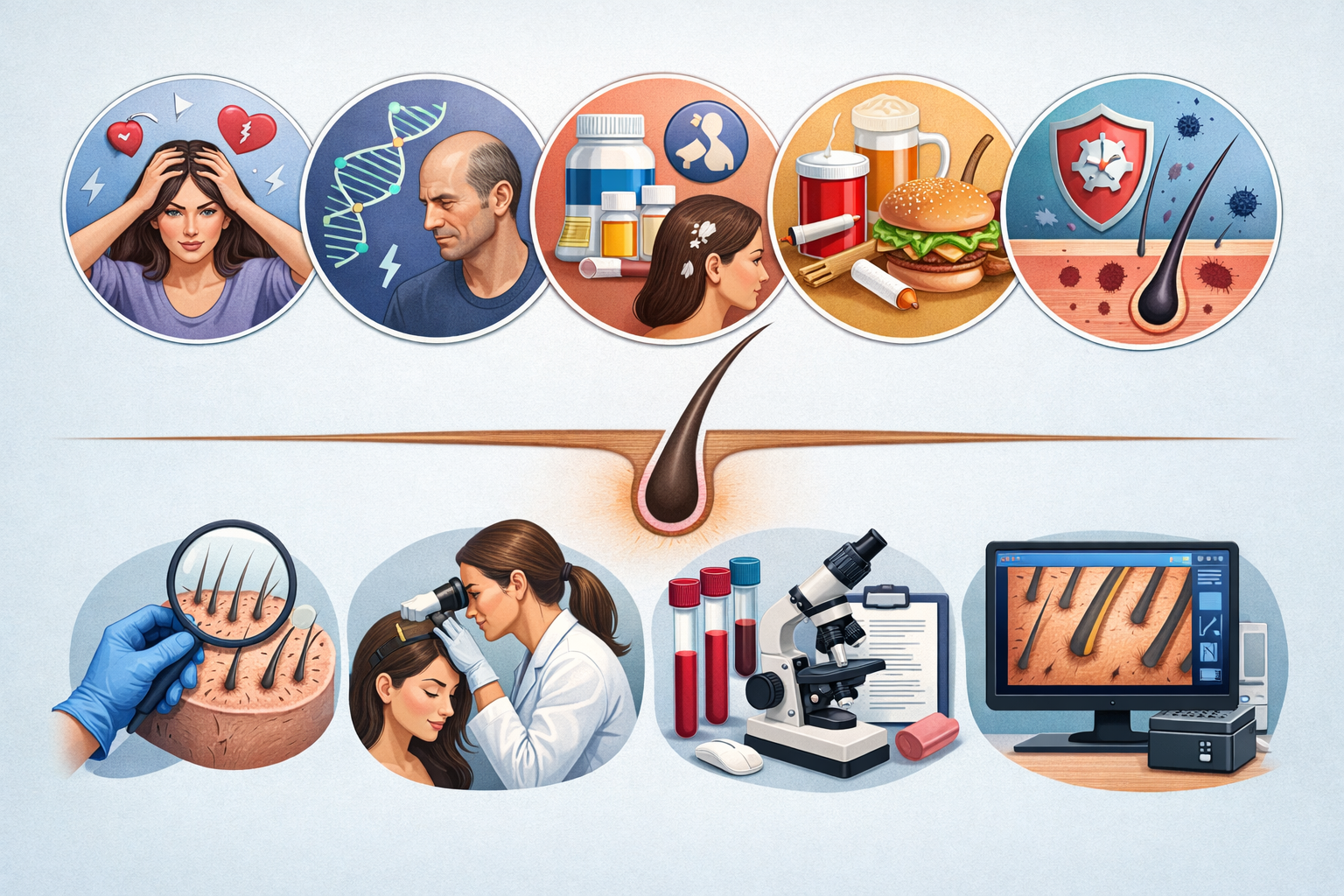
Hair loss is no longer a concern limited to age or genetics. Today, people across all age groups experience thinning hair, excessive shedding, or visible scalp changes that affect confidence and emotional well-being. At Tricho Talk, we regularly interact with individuals who are confused about why their hair is falling and unsure whether it’s temporary or a sign of an underlying condition. Understanding the causes of hair loss and diagnosing it correctly is the first and most important step toward effective management.
What is Hair Loss?
Hair loss, medically known as alopecia, refers to excessive shedding or thinning of hair from the scalp or other parts of the body. While losing some hair daily is part of the natural growth cycle, hair loss becomes a concern when the rate of shedding exceeds regrowth or when hair follicles stop producing healthy strands altogether. Hair loss can be temporary or permanent, gradual or sudden, and its pattern often provides important clues about the underlying cause.
What are the Types of Hair Loss?
Hair loss presents itself in different forms depending on genetics, health conditions, lifestyle factors, and hormonal balance. Androgenetic alopecia is the most common type and affects both men and women, often progressing gradually over time. Telogen effluvium causes sudden hair shedding, usually triggered by stress, illness, or nutritional deficiencies. Alopecia areata is an autoimmune condition where the immune system attacks hair follicles, leading to patchy hair loss. Other forms include traction alopecia caused by tight hairstyles and scarring alopecia, which leads to permanent follicle damage.
How Common is Hair Loss?
Hair loss is far more common than most people realize. A significant percentage of men experience noticeable hair thinning by their early thirties, while women often notice increased shedding after hormonal changes such as pregnancy, menopause, or thyroid imbalance. Urban lifestyles, high stress levels, poor dietary habits, and environmental factors have contributed to a rising number of hair loss cases, making it one of the most frequently discussed cosmetic and medical concerns today.
What are the Causes of Hair Loss?
Hair loss is rarely caused by a single factor. Genetics play a major role, especially in pattern hair loss, but lifestyle and health conditions often accelerate the process. Hormonal imbalances involving thyroid hormones, androgens, or insulin can disrupt the hair growth cycle. Nutritional deficiencies, particularly low levels of iron, protein, vitamin D, and B-complex vitamins, weaken hair follicles. Chronic stress, sudden weight loss, medical conditions, scalp infections, and certain medications can also trigger excessive shedding. At Tricho Talk, identifying the root cause rather than masking symptoms is a key part of our approach.
What are the Symptoms of Hair Loss?
The symptoms of hair loss vary depending on its type and severity. Some people notice gradual thinning on the crown or widening of the parting line, while others experience sudden clumps of hair falling out during washing or combing. Patchy bald spots, itching, redness, or scalp sensitivity may indicate an underlying scalp condition. Changes in hair texture, reduced volume, or slower regrowth are often early warning signs that should not be ignored.
What are the Complications of Hair Loss?
While hair loss itself is not life-threatening, its psychological impact can be significant. Persistent hair fall can lead to low self-esteem, anxiety, and social withdrawal. In certain cases, untreated scalp infections or autoimmune conditions can cause permanent follicle damage, making hair regrowth difficult. Hair loss may also be an external indicator of internal health issues such as anemia, thyroid disorders, or hormonal imbalance, which require medical attention beyond cosmetic treatment.
How is Hair Loss Diagnosed?
Accurate diagnosis is essential for effective hair loss management. At Tricho Talk, diagnosis focuses on understanding personal history, lifestyle patterns, stress levels, and dietary habits. Clinical scalp evaluation helps assess follicle health, hair density, and shedding patterns. In many cases, blood tests are recommended to identify nutritional deficiencies, hormonal imbalances, or underlying medical conditions. Advanced diagnostic tools such as trichoscopy allow for a detailed examination of the scalp and hair shafts, enabling a more precise understanding of the problem.
How is Hair Loss Treated?
Hair loss treatment depends entirely on its cause and stage. Nutritional correction, lifestyle modification, and stress management often form the foundation of treatment. Medical therapies may be advised to regulate hormones, improve blood circulation to the scalp, or control inflammation. Non-surgical solutions such as topical treatments, oral supplements, and regenerative therapies are commonly explored before considering advanced options. At Tricho Talk, treatment planning is personalized, practical, and focused on long-term hair health rather than quick fixes.
How Can I Prevent Hair Loss?
Preventing hair loss starts with maintaining overall health. A balanced diet rich in essential nutrients, proper sleep, and effective stress management play a crucial role in maintaining a healthy hair cycle. Gentle hair care practices, avoiding excessive heat or chemical treatments, and keeping the scalp clean help protect hair follicles. Early consultation with a hair expert can prevent minor issues from progressing into advanced hair loss.
What is the Outlook for People with Hair Loss?
The outlook for hair loss largely depends on early diagnosis and timely intervention. Many forms of hair loss are reversible when treated at the right stage. Even genetic hair loss can be slowed significantly with proper guidance and consistent care. With increasing awareness, advanced diagnostics, and personalized treatment approaches, people today have far better options to manage hair loss effectively than ever before.
When to See a Doctor?
You should consider seeking professional help if hair loss is sudden, excessive, or accompanied by scalp discomfort, itching, or redness. Hair loss that begins after illness, pregnancy, or major stress should also be evaluated. If thinning continues despite lifestyle changes or home remedies, a professional consultation can help identify the root cause and prevent long-term damage.
Conclusion
Hair loss is a complex condition influenced by genetics, health, lifestyle, and emotional well-being. Understanding its causes and diagnosing it correctly is the foundation of successful treatment. At Tricho Talk, the focus is on clarity, education, and personalized guidance, helping individuals make informed decisions about their hair health. With the right approach and timely care, hair loss can be managed effectively, restoring not just hair but confidence as well.
Leave a reply